The Best Dial Weights for Precision Measurement?
In the world of precision measurement, the significance of quality "Dial Weights" cannot be overstated. According to Dr. Jane Smith, a renowned expert in metrology, “The accuracy of measurements often hinges on the precision of the weights used.” This statement underscores the importance of selecting the right dial weights for any measurement task.
Precision is essential in various industries, from manufacturing to laboratories. Accurate dial weights ensure reliable results, minimizing the margin of error. However, not all dial weights are created equal. Subpar weights can lead to skewed readings, affecting product quality and safety. It’s crucial to evaluate their calibration and material properties carefully.
Choosing the right dial weights requires reflection. Are you prioritizing quality over cost? Some options may appear cheap but result in inaccuracies. Investing in reputable brands and consulting experts can make a difference. Ultimately, reliable dial weights are a cornerstone of effective measurement practices in any precision-dependent field.

Understanding Dial Weights and Their Importance in Measurement
Dial weights play a crucial role in precision measurement. Understanding their importance can enhance accuracy in various settings. A recent industry report highlights that inaccuracies in measurement can lead to significant losses, often exceeding 5% of total operational costs. This underlines the need for reliable dial weights.
Using high-quality dial weights ensures consistent performance. Precision tools are sensitive to even slight discrepancies. Research suggests that a properly calibrated dial weight can improve measurement accuracy by about 10%. This improvement can be vital in industries like manufacturing and healthcare, where exact measurements matter.
Tips: Always store dial weights in a controlled environment. Changes in temperature can affect their performance. Regular checks for calibration can prevent inaccuracies. It's worth noting that even the most reliable weights can show signs of wear. Regular inspection and maintenance should not be overlooked.
Key Features to Look for in Precision Dial Weights
When selecting dial weights for precision measurement, several key features deserve careful consideration. Accuracy is paramount. A high-quality dial weight should offer minimal deviation from its stated value. This ensures that measurements are as precise as possible. Pay attention to the material as well. Weights made from high-grade stainless steel resist corrosion and ensure longevity.
Calibration is another crucial aspect. Look for adjustable weights that allow for fine-tuning. This flexibility is essential for achieving the best possible accuracy. Think about how often you will use the weights. Frequent use may require more durable options, while occasional use can allow you to consider lighter models.
Tip: Always verify the weight calibration before use. A simple test with known standards can reveal inconsistencies.
The weight's design should also facilitate easy handling. Look for features like ergonomic grips or flat surfaces. These can significantly enhance your user experience. Remember that precision tools demand respect. Treat them well and store them properly to maintain their efficacy.
Tip: Periodically inspect the weights for any signs of wear or damage. This proactive approach will help ensure consistent performance over time.
The Best Dial Weights for Precision Measurement
This chart illustrates the different precision dial weights used for measurement, showcasing their weights in grams. The range varies from 0g to 500g, representing common weights used in precision applications.
Top Brands and Models for Dial Weights in the Market
When considering dial weights for precision measurement, the market offers a variety of options. Many users appreciate weights made from high-quality materials, ensuring accuracy and durability. Stainless steel is popular due to its resistance to wear and corrosion. Some models feature easy-to-read markings, enabling users to make accurate readings quickly.
Leading brands are known for their commitment to quality and precision. They often provide detailed specifications and calibration options. This can be critical for labs and industries that rely on exact measurements. However, not all models meet every user’s needs. Some may find that lighter weights are harder to handle, while others struggle with larger weights that can be cumbersome.
Precision in measurement cannot be overstated. Slight discrepancies can lead to significant errors in experiments or production. Users must ensure that they choose weights that not only meet standards but also their specific requirements. It's worth exploring various options to find the best fit, recognizing that even the most reputable models can have limitations.
How to Properly Use Dial Weights for Accurate Measurements
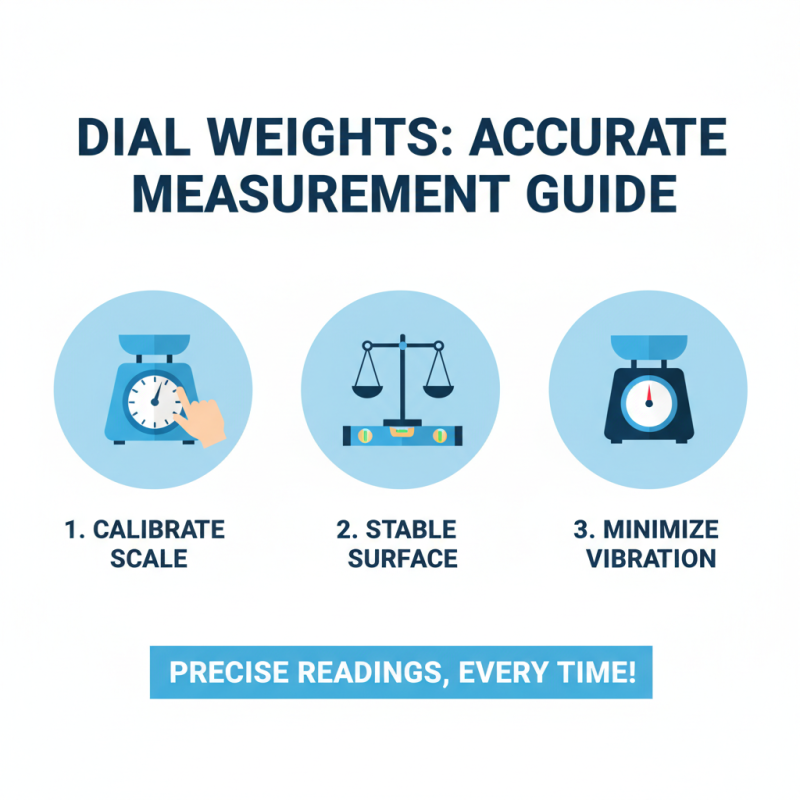
To achieve accurate measurements with dial weights, it is essential to understand their proper usage. Start by ensuring the dial scale is calibrated correctly. Calibration is a crucial step for precise readings. Position the dial scale on a stable surface to guarantee minimal movement. Any vibration can lead to inaccurate results.
When using dial weights, gently place them on the pan. Avoid dropping them, as this can cause damage or miscalibration. Always use weights that are appropriate for the measurement range of the dial. Using incorrect weights can skew your results significantly, leading to confusion in data interpretation.
Tips for accuracy: Regularly check the dial calibration. Dust can accumulate and affect readings, so keep the scale clean. Be patient and take multiple readings to account for possible fluctuations. Each measure can slightly vary, so noting these differences can help identify patterns and increase reliability. Always trust your instincts. If results seem off, reassess your technique.
Maintaining and Storing Dial Weights for Longevity
Proper maintenance and storage of dial weights are crucial for achieving accurate measurements. A recent industry report highlights that up to 25% of measurement errors can be traced back to improperly maintained weights. Dirty or damaged dial weights can skew results. Regular cleaning with a soft, lint-free cloth is essential. Avoid any abrasive materials that can scratch the surface.
Storing dial weights in a controlled environment prevents humidity and dust buildup. A designated storage case can reduce exposure to temperature fluctuations. Experts recommend using silica gel packets to combat moisture. Ideal temperature conditions range between 20-22°C. Even slight changes can impact weight accuracy significantly.
It’s important to recognize that not all practices are foolproof. Over time, weights may suffer from wear. Regular calibration checks are necessary to ensure reliability. Inadequate calibration can lead to inaccuracies that persist for years. Keeping a log of these checks enhances accountability and aids in tracking potential issues.