How to Choose the Best Dumb Bells for Your Home Workout?
When it comes to home workouts, selecting the right Dumb Bells can significantly impact your fitness journey. Fitness expert John Smith, a renowned personal trainer, once stated, "The right Dumb Bells can transform your workout efficiency." This insight emphasizes the importance of making informed choices.
You should consider various factors when choosing Dumb Bells. Look at weight options. A good range caters to different exercise needs and personal strength. Also, think about your available space. Compact designs are best for small areas. Durability is key—invest in quality materials that withstand regular use.
Yet, users often face challenges. Some buy too heavy, leading to injury. Others opt for sets that don't match their workout goals. Reflecting on these points can help you avoid common pitfalls. By understanding your needs and preferences, you’ll be better equipped to choose the right Dumb Bells for your home workouts.
Types of Dumbbells Suitable for Home Workouts
When selecting dumbbells for home workouts, considering the types is essential. There are fixed-weight dumbbells, which come in designated weights. They are simple and perfect for beginners who want consistency. Adjustable dumbbells, however, are more versatile. They allow you to change weights easily, making them suitable for various exercises. This option saves space and money.
Another type is rubber-coated dumbbells. They protect your floors and are often easier to grip. They may not be as durable as metal options but provide comfort during workouts. Take a moment to think about your workout goals. Are you looking to build strength or improve endurance? This affects your choice of dumbbell type.
It's important to consider your storage space. If it's limited, adjustable weights may be your best bet. However, some users find them bulky and challenging to adjust during workouts. Reflect on your preferences and workout style. Experimenting with different types can lead to a better understanding of what suits you best. Each type has strengths and weaknesses, so evaluate them carefully.
Choosing the Best Dumbbells for Your Home Workout
Factors to Consider When Choosing Dumbbells
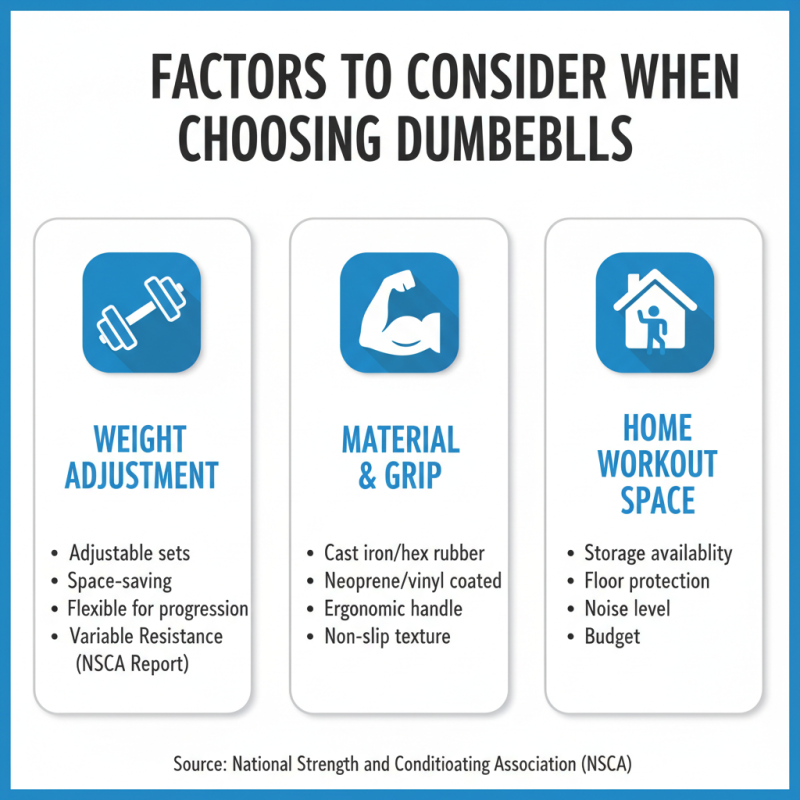
When selecting dumbbells for home workouts, various factors play a crucial role. Weight adjustment is a primary consideration. Adjustable dumbbells can save space and offer flexibility. According to a report by the National Strength and Conditioning Association (NSCA), variable resistance training shows improved strength outcomes. Adjustable sets allow gradual weight increases, catering to progressive overload principles.
Size and grip are also significant. Look for dumbbells that fit comfortably in your hand. A secure grip enhances safety during workouts. Research from the American Council on Exercise (ACE) highlights that grip strength influences exercise effectiveness. It’s vital to choose weights that suit your current fitness level, but many skip this, leading to injuries.
Additionally, material matters. Rubber-coated or neoprene options are popular because they reduce noise and protect flooring. However, some bodybuilders prefer metal for durability. Choosing the right style depends on your workout environment. Balancing aesthetics with performance can be challenging. You should reflect on your space limitations and personal goals. Selecting the best dumbbells involves careful thought and consideration of these varied factors.
Material and Construction Quality of Dumbbells
When choosing dumbbells for home workouts, pay close attention to material and construction quality. Dumbbells can be made from a variety of materials like metal, rubber, or plastic. Each of these materials has its pros and cons. Metal dumbbells tend to be more durable and long-lasting. However, they can be prone to rust and corrosion if not properly maintained. On the other hand, rubber-coated dumbbells are often easier to grip and can help protect floors.
The construction of the dumbbell is equally important. Look for options with solid construction and well-fitted parts. A poorly constructed dumbbell may wobble or break during use, posing a safety risk. Opt for options with a seamless design to avoid any weak points. Some users may overlook this aspect, but it plays a vital role in overall workout safety. Consider the weight adjustment features as well. Adjustable dumbbells are versatile, but the locking mechanism needs to be reliable.
Think about ergonomics too. Depending on your grip style, some dumbbells may be more comfortable than others. A good grip can enhance your lifting technique and prevent injury. Sometimes, users may find that heavier dumbbells are less comfortable to handle, leading them to choose lighter weights. Make sure to test different styles. It's not about aesthetics; it's about functionality and comfort. Your choice can greatly influence your workout effectiveness.
How to Choose the Best Dumb Bells for Your Home Workout? - Material and Construction Quality of Dumbbells
| Dumbbell Type |
Material |
Weight Range |
Construction Quality |
Price Range |
| Adjustable Dumbbells |
Steel and Plastic |
5-52.5 lbs |
High |
$300 - $400 |
| Rubber-Coated Dumbbells |
Rubber and Steel |
10-40 lbs |
Medium |
$50 - $150 |
| Hex Dumbbells |
Cast Iron |
5-25 lbs |
High |
$30 - $100 |
| Vinyl-Coated Dumbbells |
Vinyl and Steel |
1-10 lbs |
Medium |
$20 - $60 |
| Competition Dumbbells |
Steel |
2-20 kg |
Very High |
$200 - $500 |
Adjustable vs. Fixed Weight Dumbbells: Pros and Cons
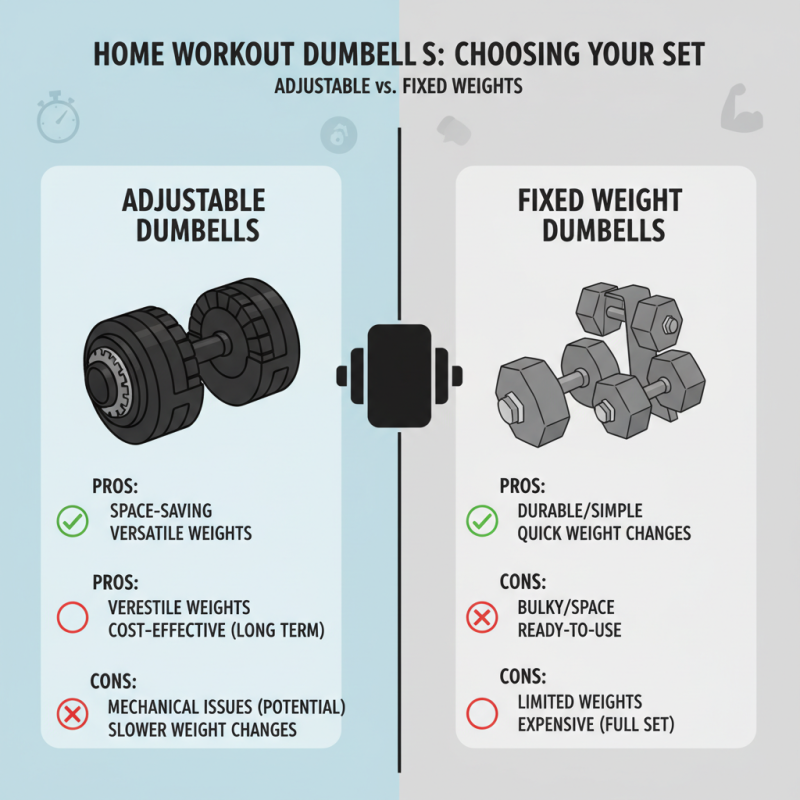
When considering home workouts, the choice between adjustable and fixed weight dumbbells is crucial. Fixed weight dumbbells are straightforward. They come in specific weights and are often more durable. However, they take up space and limit weight options. For someone with a varied workout routine, this can be a significant drawback.
Adjustable dumbbells offer versatility. You can change the weight easily to match your exercises. This feature makes them ideal for limited spaces, as they replace multiple sets of fixed dumbbells. However, they can be bulky and sometimes a bit awkward to adjust. Some people find the mechanism frustrating during intense workouts. This can disrupt the flow of your routine.
Each type has its advantages and disadvantages. Understanding your fitness goals will help guide your choice. For example, if you prefer quick transitions between exercises, adjustable dumbbells may benefit your flow. On the other hand, if you focus on strength training with specific weight needs, fixed weights may be the better option. Choosing the right dumbbell requires reflection on your workout habits and priorities.
Budgeting for Dumbbells: Finding the Right Price Point
When budgeting for dumbbells, it's essential to find the right price point that fits your needs. Prices can vary significantly based on weight, material, and type. Many beginners think that higher prices always mean better quality. However, that’s not always the case. You can find reliable sets without breaking the bank.
Tip: Consider adjustable dumbbells. They offer versatility and save space. You can start with lighter weights and add more as you progress. This approach can be more economical in the long run. Additionally, check for local sales or second-hand options. Many people sell equipment that is hardly used.
Another aspect to reflect on is the long-term investment in your fitness journey. Cheap dumbbells can wear out quickly, leading to more spending in the future. It's crucial to balance initial costs with durability. Analyze how frequently you plan to use them. Your commitment level might change down the line.
Tip: Set a budget before shopping. Stick to it while exploring various options. This self-discipline can ultimately lead to better choices. Don't rush the process; take the time to find what suits you best. Your fitness journey deserves thoughtful decisions.