How to Choose the Right Dumbbell Pair for Your Workouts?
Choosing the right "Dumbbell Pair" can significantly enhance your workouts. Renowned fitness expert, John Doe, emphasizes, "The right weights can transform your routine." Finding the perfect dumbbells involves more than just selecting a set. It’s about understanding your fitness goals and personal strength levels.
Many beginner lifters make the mistake of choosing weights that are too heavy. This can lead to improper form and potential injuries. On the other side, selecting weights that are too light can hinder your progress. It is crucial to balance your choices based on your needs and capabilities. Consider adjustable dumbbells; they offer versatility and can save space in your gym area.
Details also matter. Look for grips that feel comfortable and weights that are easy to handle. Pay attention to materials, as durability impacts longevity. Ask yourself: Are they easy to store? Are they suitable for various exercises? Reflect on these aspects to ensure your "Dumbbell Pair" supports your fitness journey effectively.
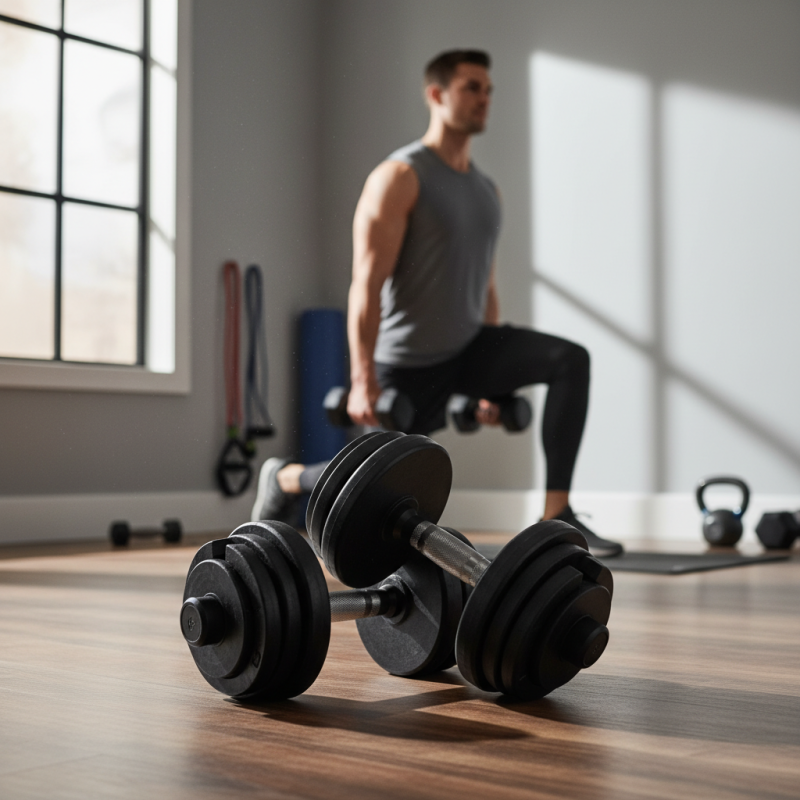
Factors to Consider When Choosing Dumbbells for Strength Training
When choosing dumbbells for strength training, several key factors come into play. Weight range is crucial. A study found that most individuals benefit from having dumbbells that range between 5 to 50 pounds. This allows for progression as strength increases. Having a varied weight set can help target different muscle groups effectively.
Another important aspect is the material. Dumbbells typically come in metal, neoprene, or rubber-coated options. Each material has its pros and cons. For example, metal is durable but can be slippery. Neoprene, on the other hand, offers a better grip, especially during sweaty workouts. It's essential to think about comfort during use. If the grips are too hard or too thick, it can hinder your performance.
Last, consider storage space. Dumbbells can take up considerable room, especially if you opt for multiple pairs. Adjustable dumbbells can be a practical solution, saving space while still allowing variety. Reflecting on all these factors helps you make an informed decision. Remember, the right choice can greatly enhance your workout experience.
How to Choose the Right Dumbbell Pair for Your Workouts? - Factors to Consider When Choosing Dumbbells for Strength Training
| Factor |
Description |
Importance (1-5) |
| Weight Range |
Select a range that suits your strength level for both novice and expert usage. |
5 |
| Material |
Choose between rubber, vinyl, or metal for durability and grip during workouts. |
4 |
| Grip Comfort |
Ensure that the dumbbell handles are comfortable to hold for extended periods of use. |
5 |
| Space Efficiency |
Consider adjustable dumbbells if you have limited storage space. |
3 |
| Ease of Use |
Priority should be on finding dumbbells easy to change weights if adjustable. |
4 |
Understanding Different Types of Dumbbells: Fixed vs. Adjustable
When considering dumbbells for your workouts, you’ll encounter two main types:
fixed and
adjustable.
Fixed dumbbells offer a set weight.
They are straightforward and easy to use. You pick them up and start lifting.
They provide a quick solution for those who want simplicity. However, they require more space.
You may need several sets to cover different weights.
This could lead to clutter or increased costs.
Adjustable dumbbells are more versatile. You can change their weight by adding or removing plates.
They save space, as one pair can replace multiple fixed weights. However, they can be a bit
cumbersome to adjust during a workout. You might find yourself
losing focus or wasting time. Some models may feel awkward in hand.
Choosing the right type ultimately depends on your workout goals.
If space and budget allow, having both types can be beneficial.
Fixed weights can give you a solid base, while adjustable ones offer flexibility.
Each has its own pros and cons. Reflect on your training style
before making a decision.
Determining the Appropriate Weight Range for Your Fitness Level
Choosing the right dumbbell pair begins with understanding your fitness level. Start with lighter weights to assess your strength. Lifting should feel challenging but not impossible. A common recommendation is to select a weight you can lift for about 8 to 12 reps comfortably. If you can easily perform more than 12, it may be too light.
Consider your workout goals. If you're aiming for muscle building, heavier weights are beneficial. However, improper weights can lead to poor form. It's essential to reflect on your progress and adapt. For strength training, a gradual increase is key. Beginners might feel frustrated initially, but patience is crucial.
Listening to your body is vital. Some days you may feel strong, while others not so much. Adjust accordingly. It’s okay to revisit your choices and modify them. Finding the right balance and strain is a journey. Embrace the learning process and enjoy the growth.
The Importance of Grip Size and Material for Comfortable Workouts
When selecting dumbbells, grip size and material are key factors. A proper grip ensures safety and effectiveness during workouts. According to a survey by the American Council on Exercise, 58% of injuries in weight training are due to improper grip. This highlights the importance of choosing weights that fit comfortably in your hands.
Materials also play a critical role in your comfort. Rubber-coated or neoprene dumbbells offer better grip. They help reduce slipping, which can lead to injuries. Research shows that tacky surfaces enhance grip by approximately 30%, making workouts smoother. However, many overlook the impact of grip texture.
Not everyone has the same hand size. A pair that feels perfect for one may be awkward for another. This can hinder the lifting experience. It’s essential to test different grips before making a choice. Finding a balance between size and comfort is what many struggle with. Addressing these discomforts at the onset can add significant value to your training routine.
Evaluating Cost-Effectiveness and Durability of Dumbbell Options
When choosing dumbbells, cost-effectiveness and durability are key. It's easy to get lost in options. Many cheap dumbbells can break or wear down quickly. Investing in a good pair can save money in the long run. Look for materials that resist chips and cracks. Solid metal options generally last longer, but rubber-coated ones can be safer for floors.
Tips: Consider your workout routine. If you lift often, durability should be a top priority. Cheaper options may be tempting, but think about the potential replacements. A heavy-use dumbbell could be worth the higher price tag.
Also, evaluate the weight increments. Some sets come with adjustable weights. This can offer flexibility without buying multiple pairs. However, they may be less durable than fixed weights. Reflect on your training goals and choose accordingly. Every detail counts.