How to Use Heavy Dumbbells for Maximum Muscle Gain Tips?
Heavy dumbbells are a cornerstone in the quest for optimal muscle gain. Research shows that lifting heavy weights, specifically in the 70-85% of your one-rep max range, can promote significant hypertrophy. This intensity awakens muscle fibers, pushing them to adapt and grow stronger. According to the National Strength and Conditioning Association, training with heavier weights can lead to greater overall strength and muscle volume.
However, many lifters struggle to maximize their potential with heavy dumbbells. They often neglect proper form, leading to injury or subpar gains. Muscle growth requires not only intensity but also a focus on technique. Studies indicate that approximately 30% of gym-goers fail to progressively overload their muscles, a key factor in muscle hypertrophy. This indicates a need for reflection: are you truly challenging your muscles during each session?
Incorporating heavy dumbbells into your routine demands dedication and strategy. It's not just about lifting heavy; it's about doing so correctly and consistently. Tracking your progress and adapting your workouts is crucial. Remember, heavy dumbbells can be a powerful ally, but they require commitment to unlock their full potential. How you approach this challenge can reshape your fitness journey.

Choosing the Right Heavy Dumbbells for Your Fitness Level
Choosing the right heavy dumbbells is crucial for your fitness journey. Start by evaluating your current strength level. If you are a beginner, lighter weights may be a better choice. This allows for proper form and reduces the risk of injury. A heavy dumbbell might feel intimidating, but it's about gradual progression.
Consider the exercises you plan to do. For compound movements like squats or deadlifts, you may need heavier weights. However, for isolated movements like bicep curls, you might want to start lighter. Experimenting is key. You’ll quickly find what feels right. Sometimes, you might grab a weight that seems perfect but turns out to be too much.
Listen to your body. It's okay to feel challenged but not overwhelmed. If you struggle to complete your set, rethink your choice. Progress takes time. Find a weight that pushes you while allowing for good form. Adjusting your weights can make all the difference. It's not just about lifting heavy; it's about lifting right.
Understanding Muscle Anatomy for Effective Dumbbell Workouts
Understanding muscle anatomy is crucial for effective dumbbell workouts. The human body has over 600 muscles, each with specific functions. When using heavy dumbbells, target major muscle groups like the chest, back, and legs. Focus on form to prevent injuries. A minor slip can lead to discomfort or setbacks in your training.
When performing exercises, like the bench press or dumbbell squat, engage the core and maintain a steady breath. Use slow, controlled movements. Rushing through a set can compromise form. It’s better to lift lighter weights correctly than heavier weights incorrectly.
Here are some tips for maximizing gains. Ensure you warm up properly before lifting. Include isolation exercises to target smaller muscle groups too. Don’t neglect recovery; muscles grow during rest. Reflect on your progress. If you're stuck at a weight, it might be time to revisit your form or technique. Adjustments can lead to better results.
How to Use Heavy Dumbbells for Maximum Muscle Gain Tips
| Muscle Group |
Recommended Dumbbell Weight |
Repetitions |
Sets |
Rest Time Between Sets |
| Chest |
70-100 lbs |
6-10 |
3-4 |
60-90 seconds |
| Back |
60-90 lbs |
8-12 |
3-4 |
60-90 seconds |
| Legs |
80-120 lbs |
6-10 |
4-5 |
90-120 seconds |
| Shoulders |
50-80 lbs |
8-12 |
3-4 |
60 seconds |
| Arms |
30-60 lbs |
10-15 |
3-4 |
45-60 seconds |
Essential Techniques for Safe and Effective Heavy Dumbbell Exercises
Using heavy dumbbells can lead to impressive muscle gains when done correctly. Safety should always be a priority. The American College of Sports Medicine recommends using weights that are challenging but allow for proper form. This is crucial. Studies show that poor technique can lead to injuries, particularly when lifting heavy.
Proper warm-up is vital. Spend at least 10 minutes doing light cardio and dynamic stretches. This prepares your muscles and joints for heavier loads. Maintain a neutral spine throughout each exercise. A study published in the Journal of Strength and Conditioning Research highlighted that maintaining proper posture can increase muscle engagement.
Gradually increase weights. Don’t rush the process. Your body needs time to adapt. A report from the National Strength and Conditioning Association indicates that progressive overload is essential. It’s about finding that sweet spot—heavy enough to stimulate growth but not so heavy that you compromise your form. Listening to your body is part of the journey. If something feels off, reflect on your technique and adjust. Heavy lifting is effective, but it requires mindfulness and patience.
Heavy Dumbbell Training: Muscle Gain Progression
Implementing Progressive Overload with Heavy Dumbbells
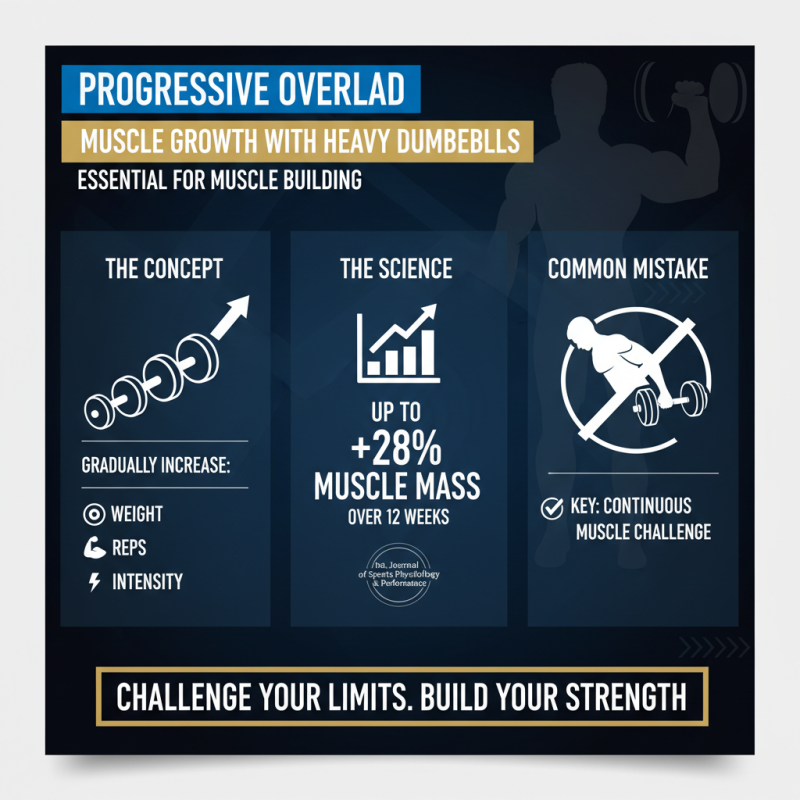
Implementing progressive overload is essential for building muscle with heavy dumbbells. This concept involves gradually increasing the weight, reps, or intensity of your workouts. According to a report from the International Journal of Sports Physiology and Performance, consistent progressive overload can lead to an increase in muscle mass by up to 28% over a 12-week training period. However, many lifters underestimate this principle. It’s not just about lifting heavier weights; it’s about ensuring that your muscles are continually challenged.
When using heavy dumbbells, aim to incrementally increase the load. Start where you feel comfortable but push your limits. For example, if you can perform 10 reps of bench presses with a certain weight, add 2.5 to 5 pounds next session. This approach should stimulate muscle growth effectively. Research indicates that muscle fibers need to be stressed to adapt. However, lifters often fail to track their progress meticulously. Without logs or apps, it’s easy to plateau without realizing it.
Proper form cannot be overlooked. Lifting heavier weights with poor technique can lead to injuries. A study in the Journal of Strength and Conditioning Research noted that up to 70% of gym injuries stem from improper lifting techniques. So, invest time in learning correct movements before increasing weights. Reflection on your workout habits is vital. Are you challenging your muscles enough? Are you focusing on form? These questions guide your growth journey. Adjust, learn, and evolve.
Designing a Weekly Workout Routine for Maximum Muscle Gain
Designing a weekly workout routine is crucial for muscle gain. Aim for at least four days of strength training each week. A balanced approach includes targeting major muscle groups. Consider a split routine. For instance, upper body one day, lower body the next. This allows for maximum recovery.
Studies show that using heavy dumbbells can increase muscle hypertrophy. Lifting heavy targets muscle fibers effectively. According to research from the National Strength and Conditioning Association, training with 70-85% of your one-rep max promotes optimal growth. Focus on compound exercises. Squats, deadlifts, and bench presses are excellent choices. These movements engage multiple muscle groups and improve strength.
Rest and nutrition are equally important. Muscles need time to recover and grow. Aim for at least 48 hours before reworking a muscle group. Track your progress, but don't obsess over minor setbacks. Adapting to your body’s changes can lead to better outcomes over time. Listen to your body, and make adjustments as necessary. Allow flexibility in your routine. This can prevent burnout and injury while maximizing muscle gain.