What Is a Heavy Kettlebell and How Much Does It Weigh?
A Heavy Kettlebell can mean different things to different lifters. For a beginner, a 16-kilogram bell may already challenge grip, posture, and breathing. An experienced athlete may consider 32 or 40 kilograms heavy. Competitive kettlebells often range from 8 to 48 kilograms, although manufacturers offer other sizes.
Weight alone does not define difficulty. A 24-kilogram kettlebell feels very different during a swing, goblet squat, Turkish get-up, or strict press. The handle thickness, movement pattern, repetitions, and training history all matter. A bell that feels manageable for five swings may become unsafe during a long set. That difference deserves attention.
It is easy to choose a heavier bell too quickly. I have seen strong-looking lifters lose control because their technique was not ready for the load. The floor may shake slightly during a hard swing. The forearm may bruise after repeated cleans. These details are useful signals, not personal failures.
A reliable definition should consider control, not ego. Coaches generally recommend mastering a movement with stable alignment before increasing resistance. Professional guidance also emphasizes gradual progression, adequate space, and a secure grip. Still, there is no universal number that makes a kettlebell “heavy.” That judgment remains personal.
This guide explains common kettlebell weights and the practical meaning of heavy training. It also considers body size, experience, exercise selection, and repetition goals. The answer may be less simple than expected. That is the point. A Heavy Kettlebell should build strength without forcing technique to collapse.
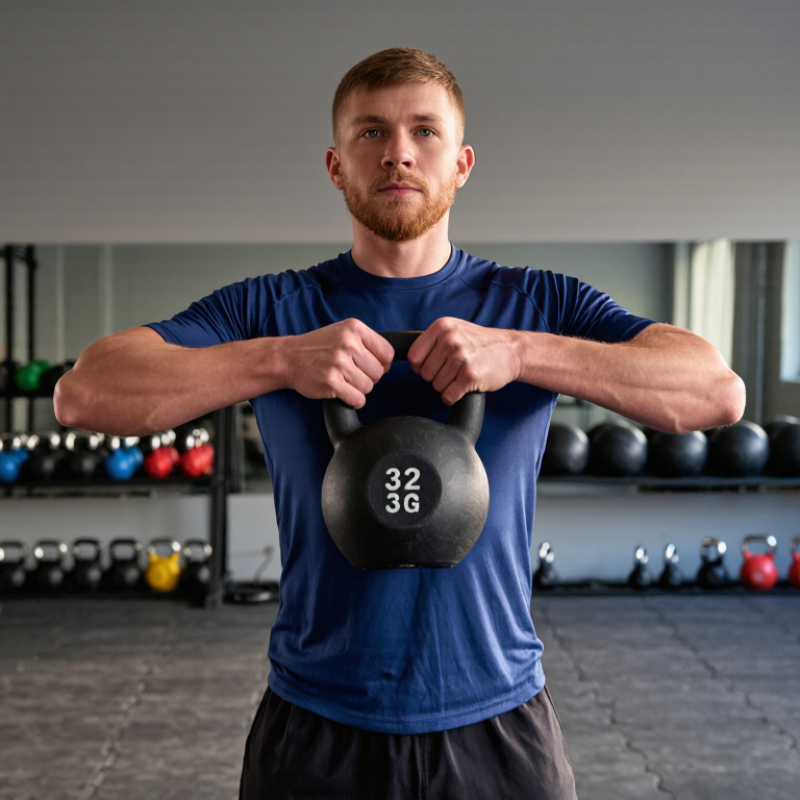
Defining a Heavy Kettlebell by Load, Skill Level, and Training Goal
A heavy kettlebell is not defined by a number alone. It is the heaviest load you can control with stable technique. For a new trainee, 8 to 16 kilograms may feel heavy during pressing or squatting. An experienced lifter may need 24 to 32 kilograms for challenging swings. The same 24-kilogram kettlebell can feel moderate for two-handed swings, yet extremely demanding for a single-arm press. Context changes everything.
In coaching practice, I assess heaviness by movement quality, breathing, and repetition speed. A heavy swing should remain powerful without pulling the back into an arch. A heavy press should move slowly, but without twisting the ribs or leaning sideways. For strength, choose a load that allows roughly three to six controlled repetitions. For power, use a weight that moves sharply and safely. For endurance, a lighter bell may become heavy after several minutes. That difference matters.
Skill changes the answer. A beginner often needs more practice than weight. I once increased the load too quickly and noticed slower footwork and a tense grip. That was useful feedback, not progress. A kettlebell becomes heavy when it challenges the target skill while preserving control. If technique breaks early, reduce the load. If every repetition feels effortless, increase it gradually. Record the weight, repetitions, and how your final set looked. My judgment is not perfect, so video or qualified coaching can reveal errors I miss.
Standard Kettlebell Weights: Common Commercial Ranges from 4 to 48 kg
What Is a Heavy Kettlebell and How Much Does It Weigh?
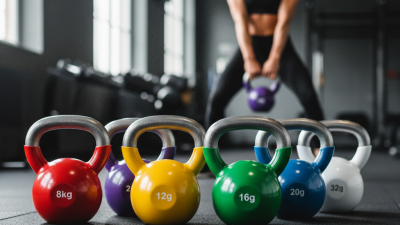
A heavy kettlebell has no universal weight. Its difficulty depends on your strength, exercise, technique, and training history. Commercial kettlebells commonly range from 4 to 48 kg, with many sizes available between these limits. Typical options include 4, 6, 8, 10, 12, 16, 20, 24, 28, 32, 40, and 48 kg. Some suppliers use different increments, so checking the actual listed weight matters.
A 4 kg kettlebell may suit beginners learning controlled movements. It can still feel demanding during longer sessions or overhead exercises. Weights from 8 to 16 kg often support basic swings, squats, presses, and carries. Many experienced recreational lifters use 20 to 32 kg for swings and deadlift variations. A 40 or 48 kg kettlebell is heavy for most people and usually requires stable technique, strong grip, and careful progression.
The label “heavy” remains imperfect. A 24 kg kettlebell may be manageable for swings but unsuitable for strict presses. That difference is easy to overlook. Choose a weight that allows clean repetitions without jerking, collapsing posture, or losing control. A practical test is simple: stop the set when technique changes noticeably. Increase load gradually, and record how the weight feels across different exercises. One number cannot describe every athlete.
What Is a Heavy Kettlebell and How Much Does It Weigh?
Standard commercial kettlebells commonly range from 4 to 48 kg. In general training use, kettlebells from 24 kg upward are often considered heavy, although the appropriate load depends on the exercise and the lifter.
The chart shows common kettlebell sizes in 4 kg increments, with approximate pound equivalents calculated using 1 kg = 2.20462 lb.
Competition Benchmarks: 24 kg for Women and 32 kg for Men
A heavy kettlebell is not defined by one universal number. Its difficulty depends on your training history, exercise choice, grip strength, and technique. In kettlebell sport, two useful competition benchmarks are 24 kilograms for women and 32 kilograms for men. These weights often appear in long-cycle, jerk, and snatch events. They are serious standards, not automatic starting points.
A 24-kilogram bell can feel manageable during controlled swings but demanding during overhead work. The 32-kilogram option adds considerable pressure to the wrists, shoulders, back, and breathing rhythm. In my experience, athletes sometimes chase these numbers too early. That choice can shorten their sets and weaken their movement quality. I once treated weight as the main goal. That was a mistake. Repeated, clean repetitions matter more than a dramatic first lift. Competition rules and divisions can also vary, so check the current event standards before preparing.
Tips:
Test a weight that allows stable posture and smooth breathing. Keep your ribs controlled during pressing and jerking. Stop when your technique becomes noticeably uneven. Record sets, rest times, and perceived effort after training. A coach or qualified instructor can check timing, lockout, and safe bell paths. Do not copy a competitor’s load immediately; their preparation may include years of structured practice. Progress may feel slow. That is normal.
Selecting a Heavy Bell Using ACSM’s 8–12-Repetition Strength Range
A heavy kettlebell is not defined by one universal number. It is heavy when the load challenges your strength without breaking your technique. ACSM’s 8–12-repetition range offers a practical starting point for selecting it.
Choose a weight that allows eight controlled repetitions. You should approach muscular fatigue between repetitions eight and twelve. If you complete fifteen repetitions easily, the bell is probably too light. If your back rounds before repetition eight, reduce the load. Heavy should still look controlled.
Keep two repetitions in reserve during early sessions. This protects form while you learn the movement. For example, your final repetitions may feel slow, but your wrist, spine, and knees should remain aligned. Rest for two or three minutes between strength sets, then reassess your performance.
The range is useful, but not perfect. A kettlebell press may fit the 8–12 guideline, while a swing depends more on power and rhythm. I once treated every difficult set as a strength set; that was a poor assumption. Difficulty alone does not prove the weight is appropriate. Track repetitions, tempo, and technique across several workouts. Increase the load only when twelve repetitions feel stable, not merely possible. Since kettlebells often increase in fixed jumps, a smaller increase in repetitions may be wiser than forcing the next weight.
Safe Progression Through Technique, Grip Capacity, and Incremental Loading
A heavy kettlebell has no universal weight. It is heavy when you cannot control each repetition with stable posture and consistent breathing. For one person, that may be 24 kilograms. For another, it may be 40 kilograms. Strength level, training history, and exercise choice all matter. A bell that feels manageable for swings may be excessive for overhead presses.
Safe progress begins with technique. Keep your feet planted, ribs controlled, and spine neutral during swings. The handle should rest firmly across the palm, not dig sharply into the fingers. Practice a clean grip before adding load. If the bell pulls your shoulder forward, stop and reset. Small details matter.
Grip capacity often limits progress before the legs do. Use short sets, such as five controlled swings, and rest before your hands open. Add repetitions gradually, or increase weight by the smallest practical amount. Do not change both at once. A heavier bell should still move smoothly, without noisy drops or rushed breathing. That sounds simple.
A useful check is repeatability. Can you perform the final set like the first? If not, the load may be too heavy today. I sometimes underestimate how quickly grip fatigue appears, especially after carries or high-repetition swings. That mistake deserves attention. Leave space for recovery, and ask a qualified coach to assess technique when pain, numbness, or repeated loss of control appears.