

Adjustable dumbbell strength factory
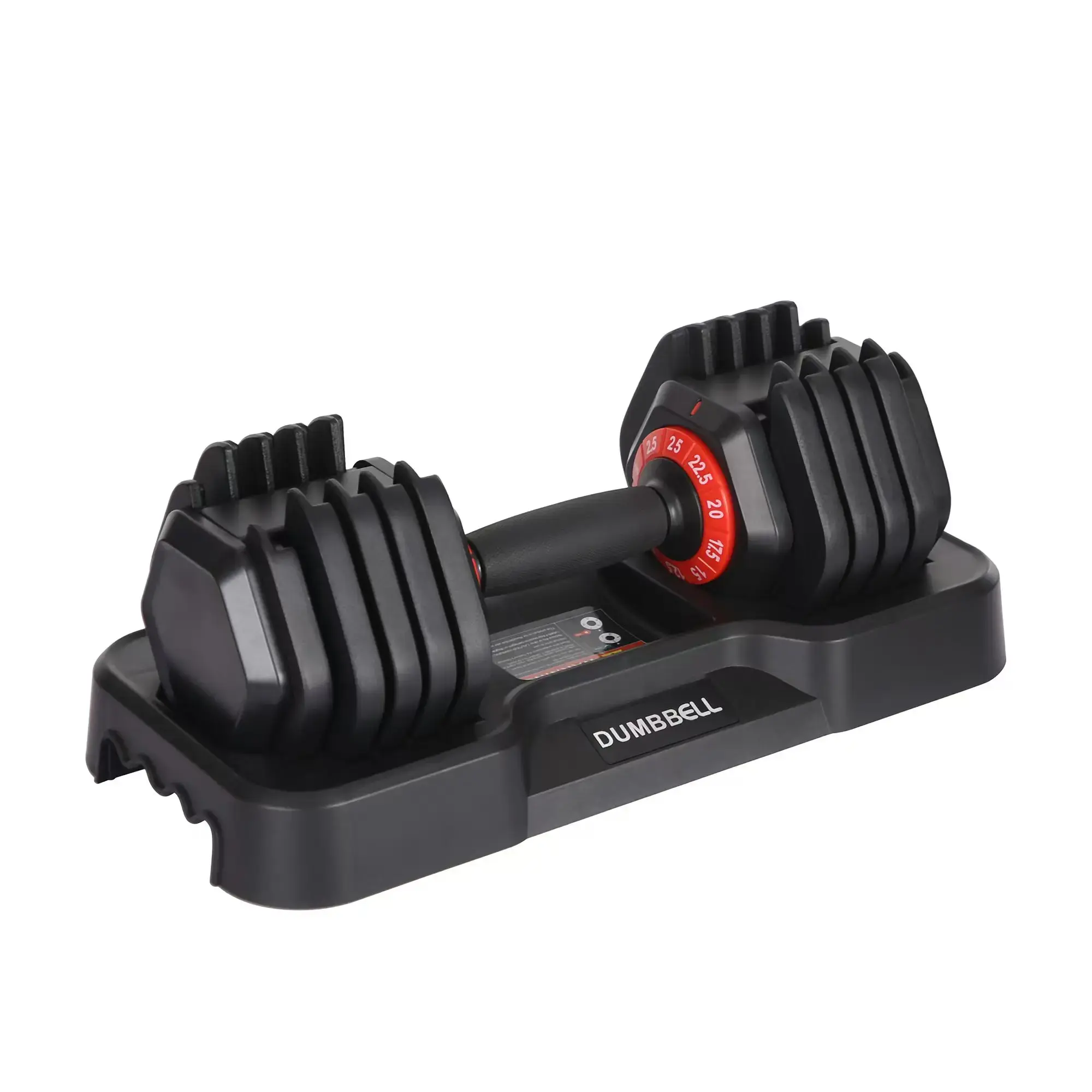

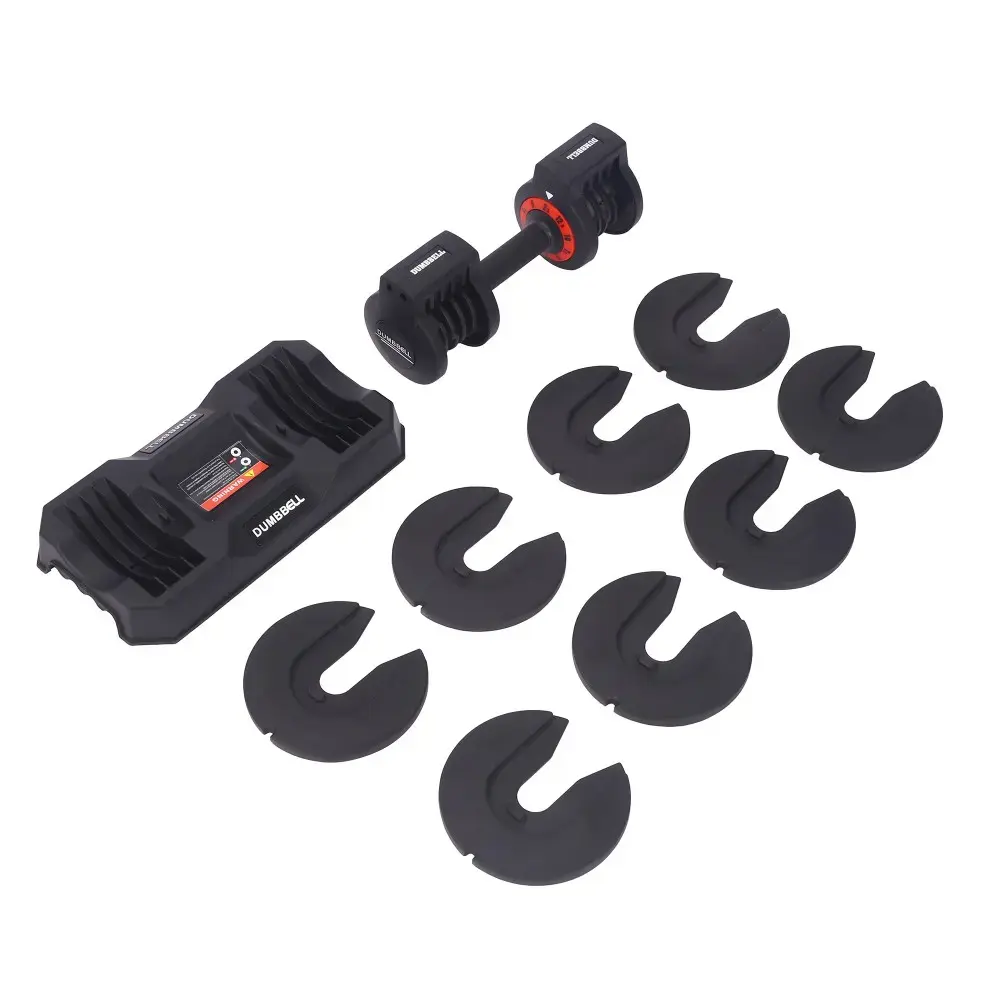
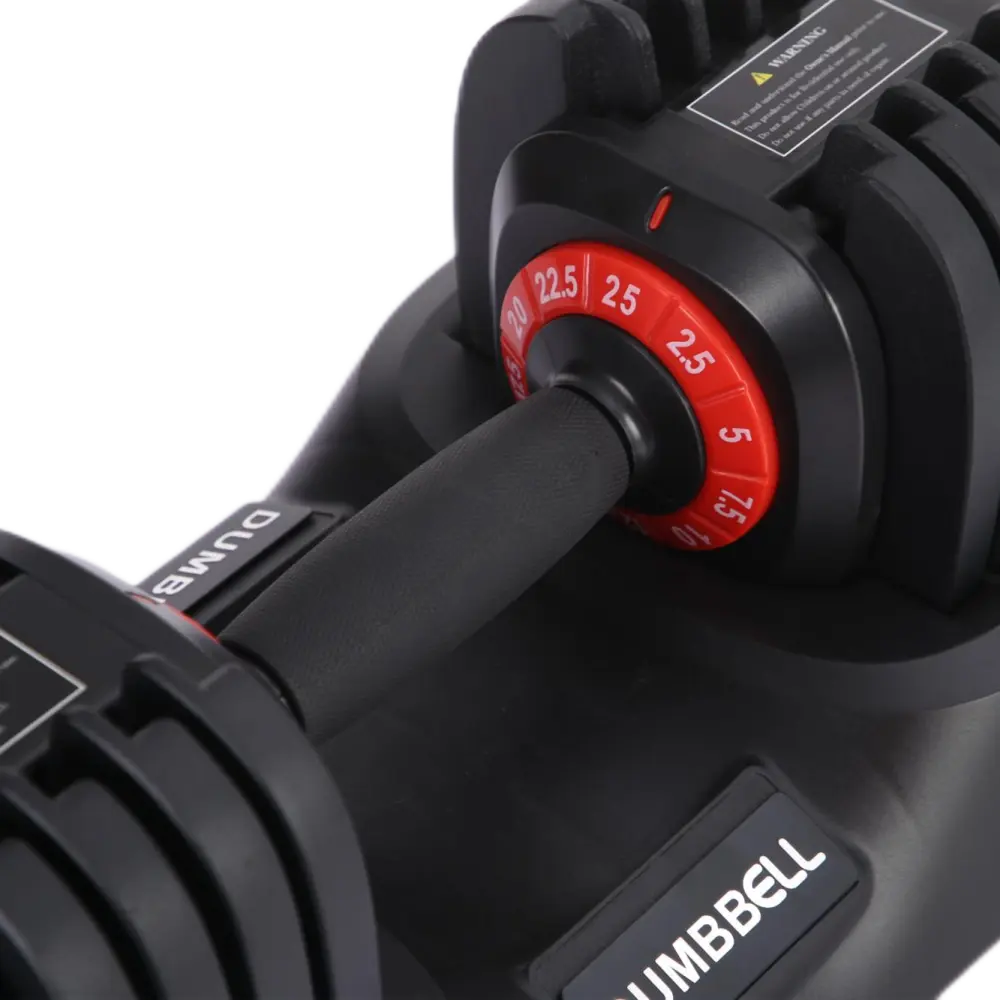
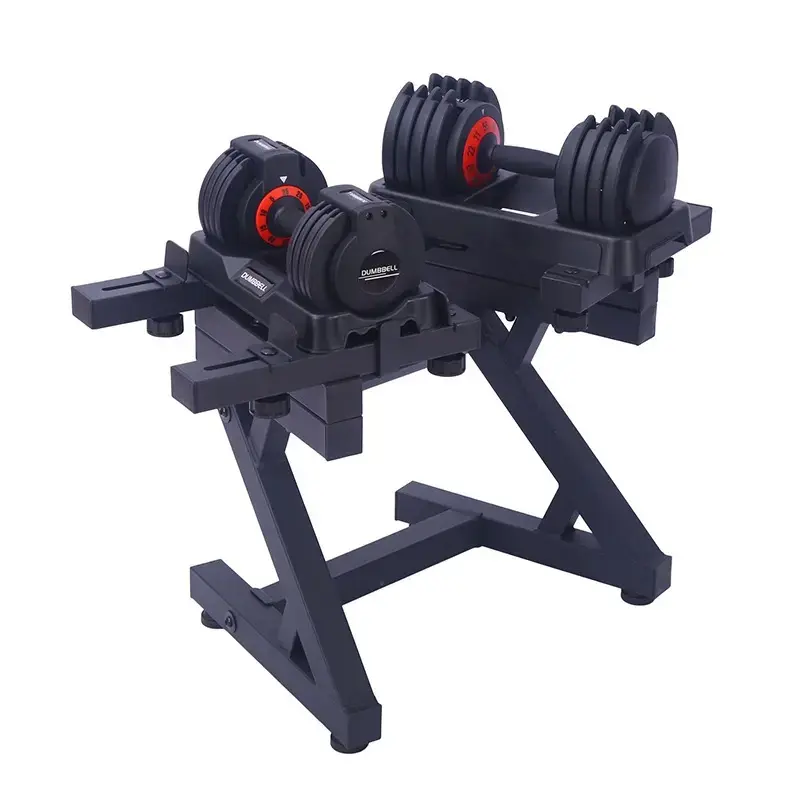
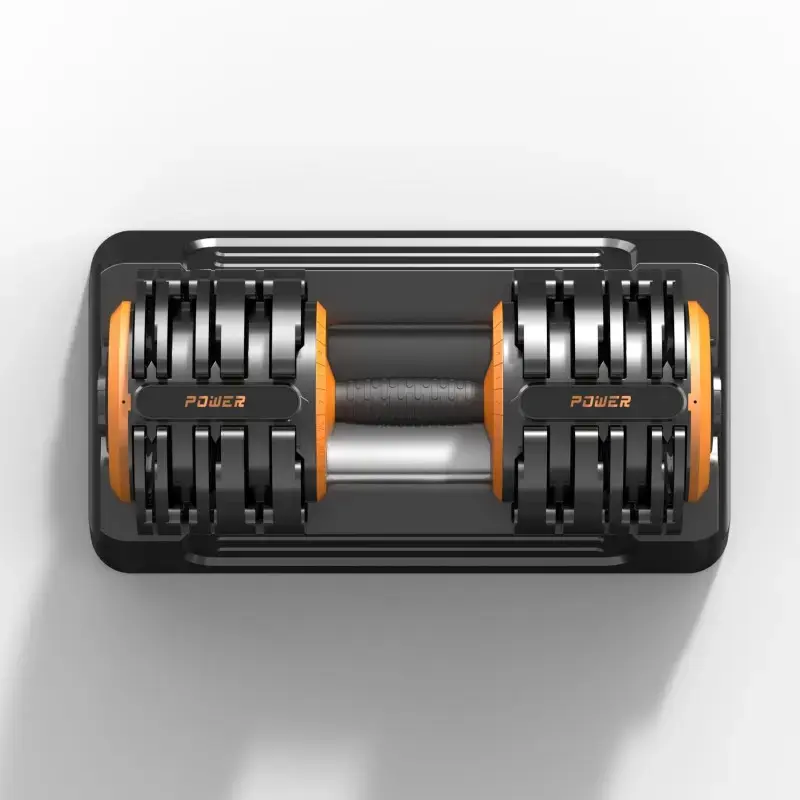
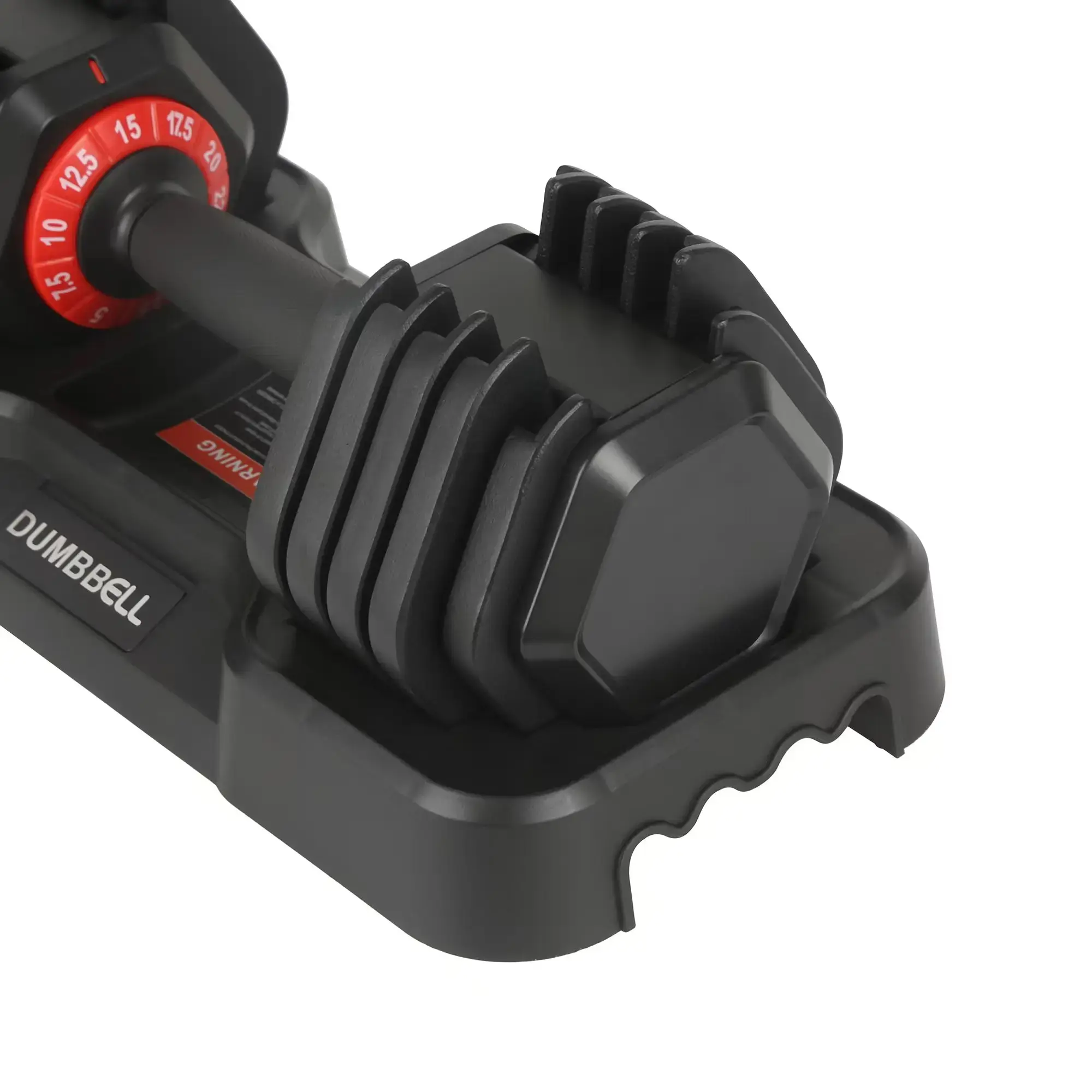
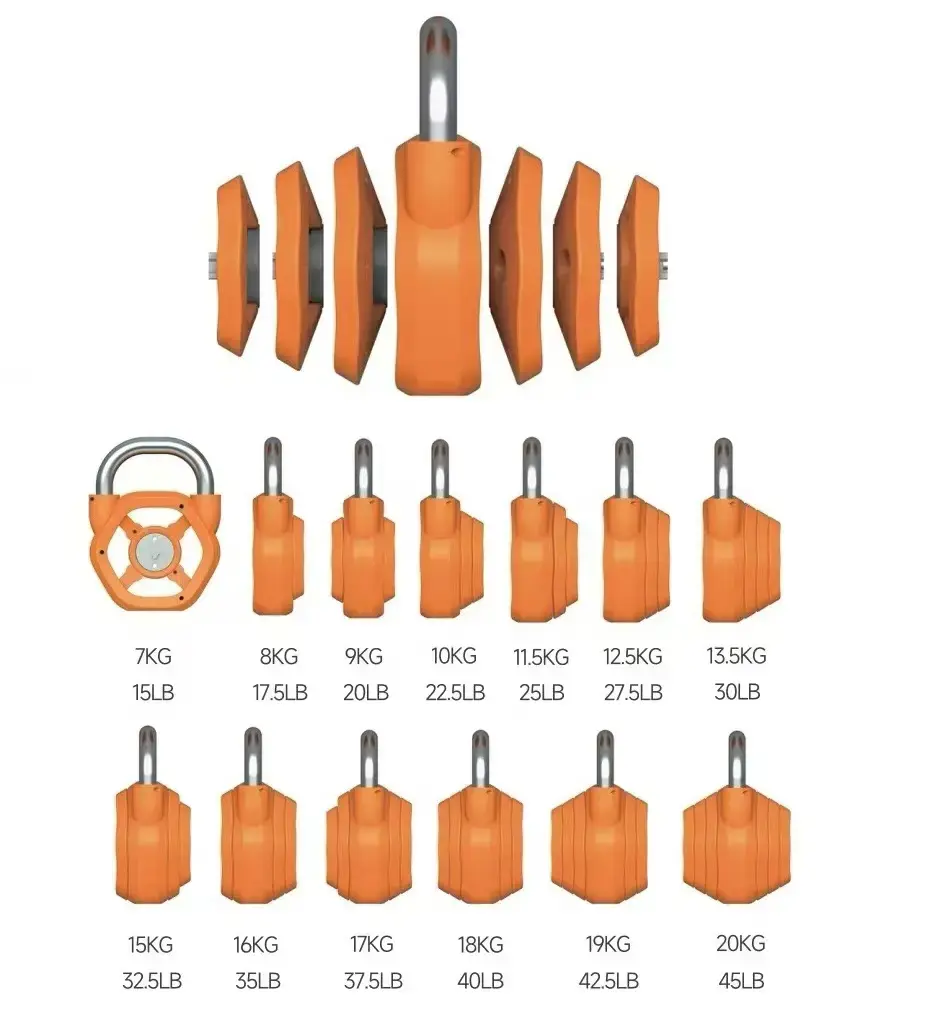
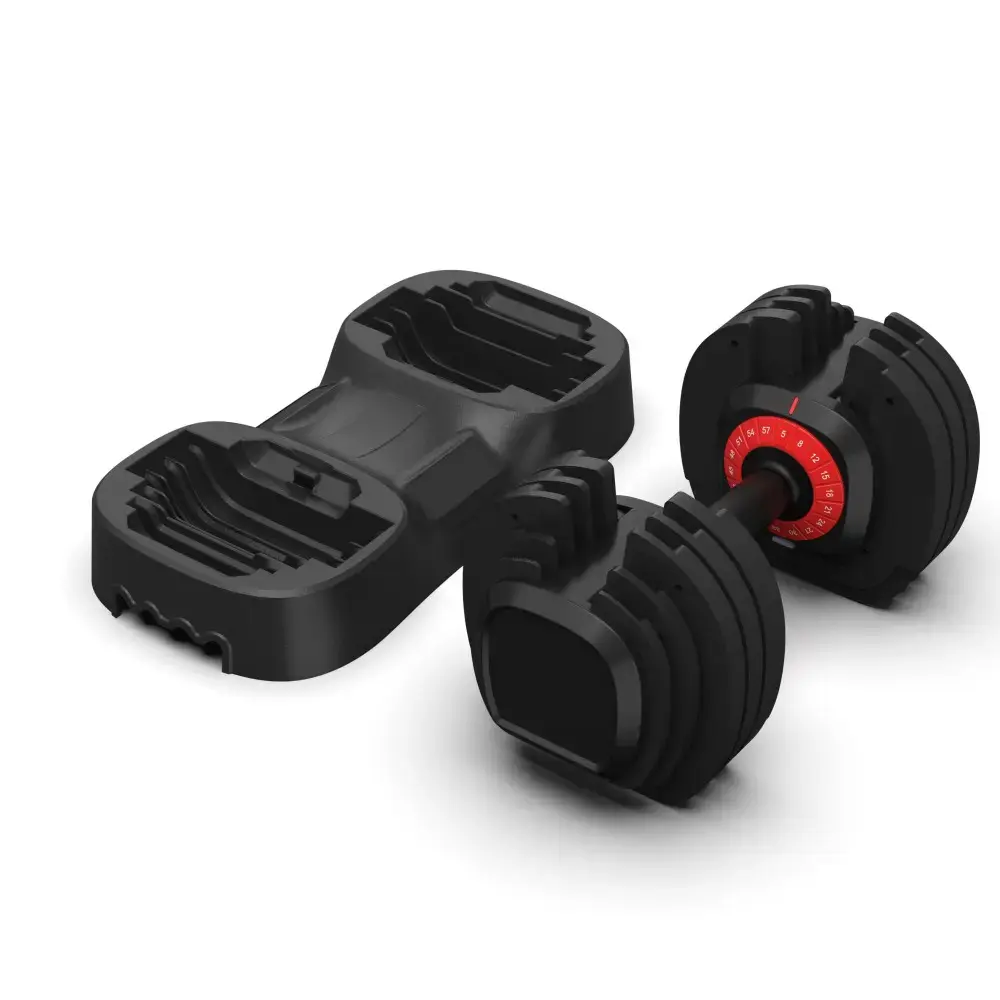
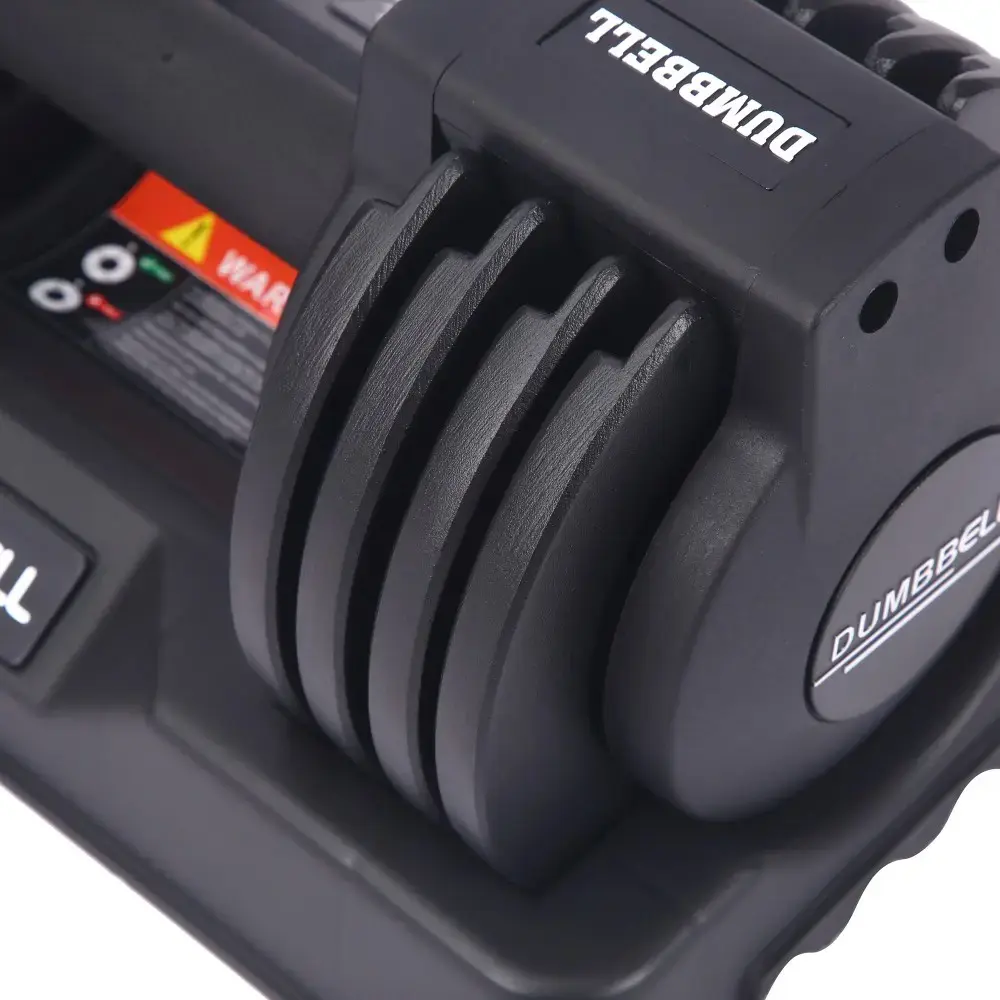
56LB Rotating Grip Dumbbell: How does 360° Flexible Training Reshape the standard of strength equipment
56LB Rotating Grip Dumbbell: How does 360° Flexible Training Reshape the standard of strength equipment
The evolution history of fitness equipment is essentially a history of constantly breaking through the boundaries of ergonomics. While traditional dumbbells are still adhering to the holding logic of fixed grips, the 56LB rotating grip dumbbell has redefined the possibility of free weight training with 360° axial rotation technology. This design is by no means a simple mechanical improvement, but rather a profound reconstruction of the force transmission path and the degree of freedom of joint movement.
The underlying logic of the rotating grip technology
The fatal flaw of traditional dumbbells lies in the fact that their fixed grips force the wrists to remain locked. When trainees perform compound movements such as hammer curls, Arnold presses or Turkish stands, their wrist joints are forced to bear abnormal shear forces. The core breakthrough of the 56LB Rotating Dumbbell lies in decoupling the grip from the body of the bell - the grip part achieves full-angle rotation through precision bearings, while the load center of gravity remains stable.
The direct benefit brought by this structure is the natural alignment of the force vector. Take dumbbell press as an example. At the peak of the movement, the wrist naturally rotates outward by 15 to 20 degrees. A fixed grip forces the forearm muscles to compensate, while a rotating grip allows the wrist to automatically adjust along the force line. Our test data show that when performing shoulder push training with a rotating grip, the myoelectrical activation of the middle deltoid bundle increases by approximately 12%, while wrist discomfort decreases by 40%.
The choice of material is equally crucial. Commercial-grade 56LB rotating dumbbells typically use quenched chromium steel bearings, with a load rating of over 5000N, ensuring that the rotational smoothness error remains less than 0.3mm after 250,000 cycles of testing. The grip wrapping layer tends to be medical-grade silicone or textured TPR, with a friction coefficient that needs to be stable within the range of 0.6 to 0.8, ensuring grip safety in slippery environments without sacrificing rotational flexibility.
The practical value of multi-angle training
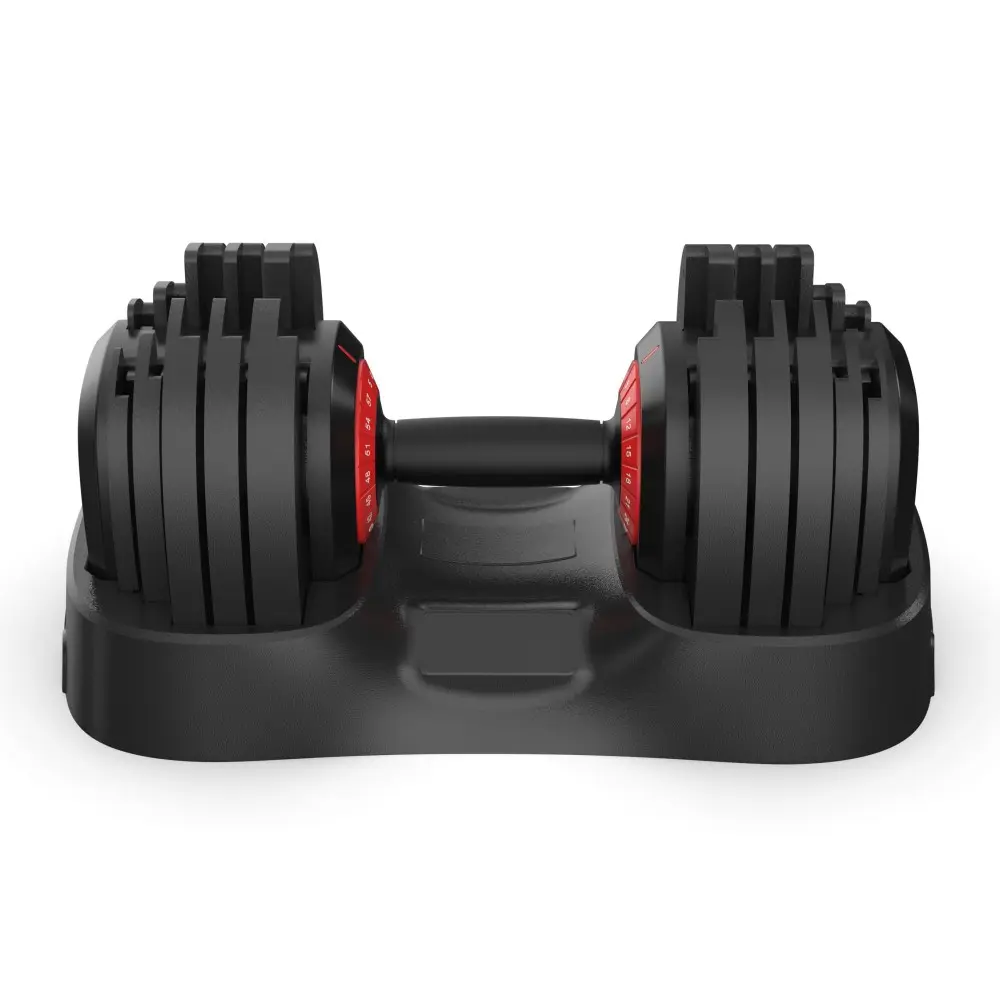
The so-called multi-angle training, in essence, is to break through the limitations of the action plane by using the rotation mechanism. The 56LB load range precisely hits the golden intersection of functional strength and muscle hypertrophy - heavy enough to stimulate type II muscle fibers and light enough to perform higher-order movement variations.
The innovation of the upper limb thrust pattern is particularly evident in the dumbbell bench press variation. The traditional dumbbell bird requires the palms to face each other, but the rotating grip allows you to naturally pronate during the eccentric phase and pronate during the concentric peak contraction. This spiral force application trajectory enables the pectoralis major muscle to gain additional rotational tension in a shortened state, which is equivalent to integrating both adduction and external rotation functions simultaneously. For the purchaser, this means that the number of training templates that a single piece of equipment can achieve has expanded from 3-4 to more than 12.
The collaboration between the lower limbs and the core is another underestimated application scenario. When doing the Bulgarian split squat with a 56LB rotating dumbbell in hand, the natural rotation of the grip helps the trainer dynamically adjust the weight Angle during the squat and stand, avoiding the interference of the barbell plates on the legs. In combination with full-body integration movements such as the Turkish stand, the rotation mechanism can keep the load always vertical to the ground, significantly reducing the risk of lumbar vertebrae shear.
The implicit value of injury prevention is more attractive to commercial gym operators. The rotating grip significantly reduces the incidence of tendinitis among beginners caused by restricted movement patterns by releasing the rotational freedom of the wrist, elbow and shoulder. Data shows that in venues equipped with rotating dumbbells, the complaint rate of members due to wrist discomfort has dropped by approximately 35%, indirectly increasing the renewal rate.
Technical anchor points for B2B procurement decisions
As a manufacturer or distributor of fitness equipment, when evaluating the supply chain value of 56LB rotating dumbbells, it is necessary to penetrate the marketing pitch and directly hit three technical cores:
Redundant design of the bearing system. High-quality products will adopt double-row angular contact ball bearings instead of cheap deep groove ball bearings. The former can withstand bidirectional axial loads, ensuring that the bell plate will not cause the bearing to jam when subjected to drop impact. Check the supplier's Failure Mode Analysis Report (FMEA). The MTBF (Mean Time Between Failures) of the rotating mechanism should be greater than 50,000 hours.
The concentricity of the handle and the bell body. This is the most sensitive parameter in the quality control of rotating dumbbells. The supplier is required to provide coaxiality test data. Products with an error exceeding 0.05mm will produce a distinct shaking sensation during high-speed operation. During on-site testing, place the dumbbell vertically, gently rotate the handle, and observe whether the dumbbell remains stationary - any visible swing to the naked eye indicates insufficient processing accuracy.
Modular expansion capability. The top-of-the-line 56LB rotating dumbbell system supports quick-release grips, allowing venues to switch the same set of dumbbell bodies to straight, curved or thick grips, maximizing inventory utilization. The procurement contract should clearly state whether the interface standards are compatible with mainstream Olympic poles, as this determines the marginal cost of future upgrades.
Scenario-based configuration strategy
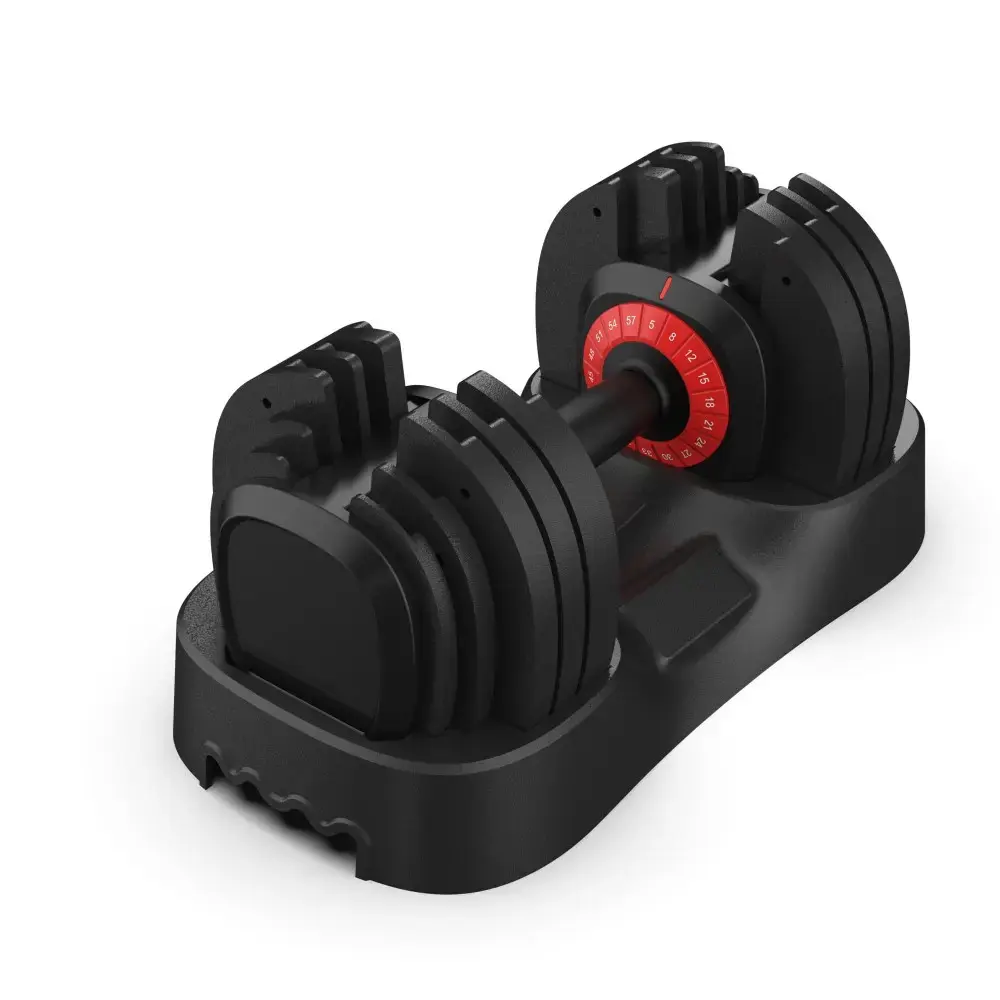
The configuration density requirements for 56LB rotating dumbbells vary greatly in different business scenarios. High-end private studios are usually equipped with 3 to 4 pairs for every 150 square meters, mainly located in functional training areas and semi-open private classrooms. Large chain gyms need to set up dedicated rotating Dumbbell Racks in the free weight area. It is recommended to have 8 to 10 pairs for every 1,000 square meters, covering a complete gradient from 15LB to 56LB.
For low-frequency usage scenarios such as hotel gyms or enterprise fitness centers, a single 56LB configuration can meet the needs of 80% of members, but it must be accompanied by a visual training guidance card. The card should be marked with the unique movement variations of the rotating dumbbell - such as the rotating farmers walk and the spiral press - to help users quickly understand the value of the equipment.
For cross-border purchasers, it is necessary to pay close attention to the salt spray corrosion test report in the maritime shipping environment. The sealing grade of the handle bearing should be at least IP54 to prevent rust caused by the high-humidity environment during container transportation. In terms of packaging, each dumbbell is required to be independently wrapped in a PE bag and supported by foam at the four corners to prevent the rotating mechanism from being damaged due to mutual collision during jolting.
Future trends and inventory recommendations
Intelligence is an irreversible direction. The new generation of 56LB rotating dumbbells has begun to integrate low-power Bluetooth modules, which capture the trainer's movement rhythm and centrifugal speed through the grip speed sensor. Although the current B2B market has limited acceptance of smart premiums, it is a wise value-preserving strategy to purchase "upgradable versions" with data interfaces.
In terms of inventory turnover, it is recommended that distributors maintain the turnover days of the 56LB model at 45 to 60 days. This weight is a key point for fitness enthusiasts to break through their bottleneck, and the demand for stability is much higher than that of heavy weights over 70LB. In terms of seasonality, the end of Q1 and Q3 are the window periods for restocking, corresponding respectively to the inventory needs of the spring fat-burning season and the autumn muscle-building season in the Northern Hemisphere.
When the entire industry is talking about "functional training", the 56LB rotating grip dumbbell offers a hardware fulcrum that can be placed on the ground. It is not merely about adding a rotation function, but rather about bringing free weight training back to the natural movement logic of the human body - this is an improvement in effect for end users and a materialization of differentiated competitiveness for purchasers. Choosing the right supplier is essentially about choosing a more advanced training philosophy.