

Adjustable dumbbell strength factory

Analysis of the Welding Process for Adjustable Dumbbells
Analysis of the Welding Process for Adjustable Dumbbells
In the fitness equipment industry, the durability, safety, and precision of adjustable dumbbells directly determine user experience and brand reputation. As the lifeline connecting the dumbbell's core components, the welding process, along with its technical selection and execution quality, is a crucial pillar of product performance. Unlike conventional fixed dumbbells, adjustable dumbbells must withstand the mechanical stress of frequent weight switching, perspiration erosion, and the impact of prolonged weight bearing. This places demands on the strength, sealing, and stability of welded joints that far exceed industry standards. This article will deeply analyze the welding technology behind adjustable dumbbells from four perspectives: process selection logic, core technology analysis, quality control systems, and industry development trends.
1. The Logic of Adjustable Dumbbell Welding Process Selection: Demand-Driven Technology Matching
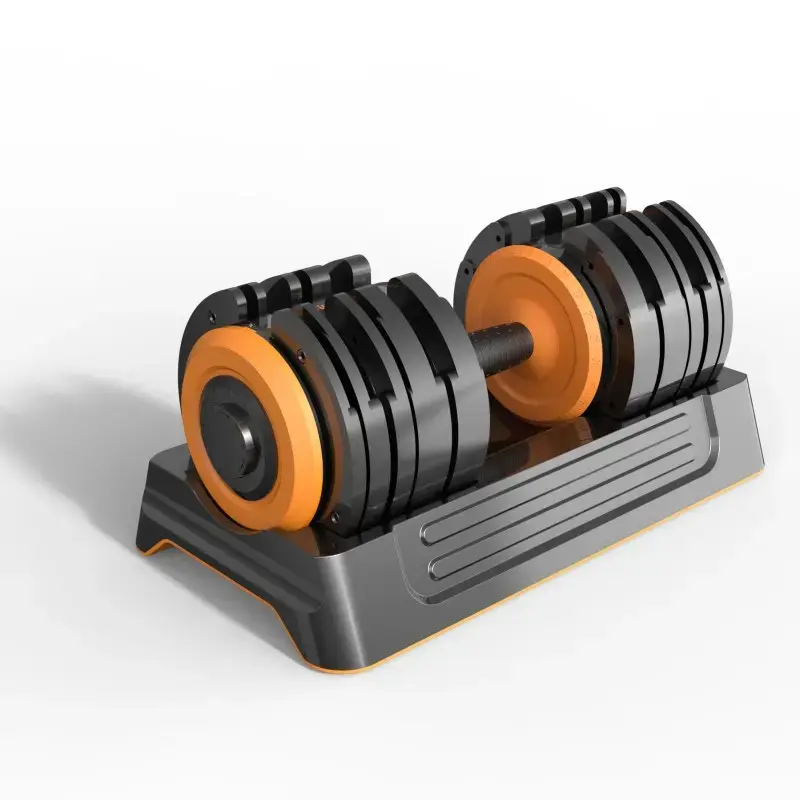
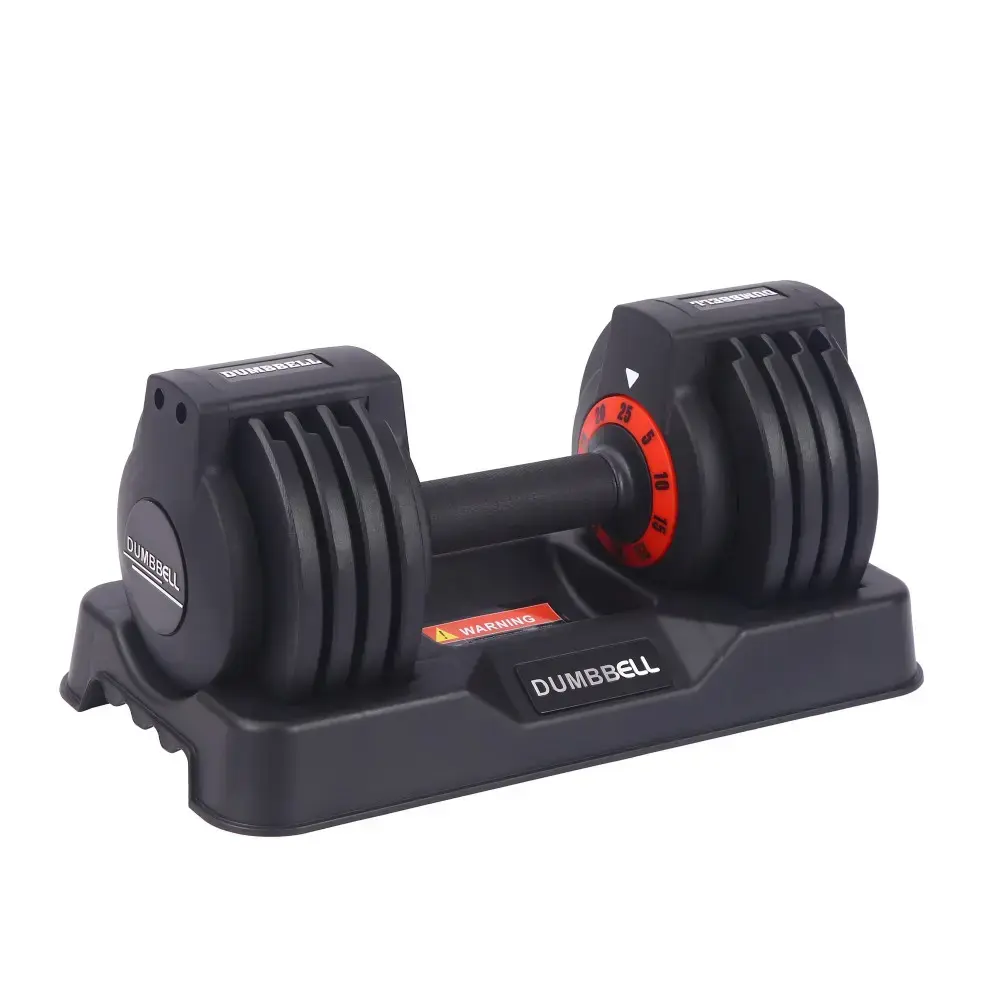
The selection of a welding process is not a blind follow-up; it is a systematic decision based on the dumbbell's structural design, material properties, performance requirements, and production costs. The core welding areas of adjustable dumbbells are concentrated in three main areas: the weight block connection structure (such as the weight block splicing in laminated dumbbells), the adjustment mechanism components (such as the sleeve welding of the latch-type locking mechanism), and the connection between the handle and the load-bearing base. The stress characteristics and functional requirements of these different areas directly determine the process direction.
From a material perspective, the weight blocks of current mainstream adjustable dumbbells are mostly made of cast iron, alloy steel, or high-density cast iron composites, while the handle base is primarily composed of high-strength carbon steel. These metals have significant differences in weldability, melting points, and thermal deformation properties. For example, welding cast iron weight blocks requires addressing white cast iron microstructure and cracking, while alloy steel components require a balance between hardenability and toughness in the weld.
From a performance perspective, entry-level adjustable dumbbells for home use focus on cost control and basic strength, while industrial-grade professional models must meet fatigue strength requirements of more than 100,000 adjustment cycles. Competition-grade products even require salt spray testing to withstand corrosion in the humid gym environment. Furthermore, aesthetic appeal has become a key competitive advantage for consumer products, and weld smoothness and spatter-free properties are also considered in process selection. Overall, selecting a welding process is essentially a dynamic balance between performance requirements, material properties, and cost control.
II. In-Depth Analysis of Mainstream Welding Processes: Technical Features and Applicable Scenarios
(I) Resistance Spot Welding: The Cost-Effective Option for Efficient Mass Production
Resistance spot welding is a mainstream process for joining adjustable Dumbbell Weights. It utilizes the resistance heat generated by an electric current passing through the workpiece contact surface and adjacent areas to heat the material to a molten or plastic state. Pressure is then applied to form the weld joint. The process's core advantages lie in its efficiency and cost-effectiveness. With a single weld time of 0.5-2 seconds, it is ideally suited for mass production of multiple components, such as weights.
In adjustable dumbbell production, resistance spot welding is commonly used for stacking cast iron weights with a thickness of 3-8mm. Simultaneous welding with multiple electrodes achieves multi-point fixation, ensuring the overall flatness of the assembled weights. However, this process has significant limitations: the welds are distributed in a point-like pattern, resulting in weak shear strength, making them unsuitable for use in core load-bearing areas such as adjustment mechanisms. Furthermore, the workpiece surface requires extremely high cleanliness; rust and oil contamination can directly lead to problems such as cold and false welds. Therefore, dumbbells using resistance spot welding often require auxiliary fixing structures such as mechanical clips to enhance overall stability.
(II) Gas Shielded Welding: The "Core Guarantee" of High-Strength Connections
Gas shielded welding (especially CO2 gas shielded welding) has become the preferred process for core load-bearing components of adjustable dumbbells due to its high weld strength and adaptability. The working principle is that a shielding gas (such as CO₂ or argon) is ejected through a nozzle, forming a gas shield around the arc, isolating the molten pool from the harmful effects of air. Simultaneously, the electrode wire is automatically advanced, creating an arc with the workpiece and melting to form the weld. In welding the adjustment mechanism's shaft sleeve and load-bearing rod, gas shielded welding (GMW) creates a continuous, fully penetrated weld with a tensile strength exceeding 500 MPa, easily withstanding instantaneous impact loads exceeding 50 kg. This process is highly compatible with workpieces of varying thicknesses and materials, enabling welding of both carbon steel handles and alloy steel adjustment components. It also produces aesthetically pleasing welds and minimizes subsequent polishing. However, GMW requires high technical skills. The matching of welding current, voltage, and travel speed directly impacts weld quality, and the process must be performed in a sealed workshop to avoid airflow interference, which increases the production barrier.
(III) Laser Welding: The "Precision Benchmark" for High-End Products
Laser welding, a cutting-edge technology in precision manufacturing, is increasingly being used to weld the core components of high-end adjustable dumbbells. Its principle is to use a high-energy-density laser beam as a heat source to locally melt the workpiece and form the weld joint. This process's strengths lie in its high precision and low deformation. The laser beam focus diameter can be controlled to 0.1-0.5mm, enabling precise welding of tiny components. The heat-affected zone during welding is extremely small (typically less than 1mm), effectively preventing thermal deformation of delicate components such as weight blocks and adjustment gears, which could affect adjustment accuracy.
In welding the locking mechanism of high-end adjustable dumbbells, laser welding achieves a seamless connection between the shaft and gear, ensuring smooth adjustment and reliable locking. It even meets IP67 sealing requirements, preventing sweat from penetrating and causing corrosion. However, laser welding equipment is expensive (a single unit can cost hundreds of thousands of yuan) and places stringent demands on workpiece assembly precision (clearances must be controlled within 0.05mm). Currently, it is only used in high-end flagship models priced over $2,000.
III. Welding Quality Control: Full-Process Control from Source to Finished Product
Welding quality is directly related to the safety of adjustable dumbbells. Oversights in any step can lead to serious consequences—from a stuck adjustment to a falling weight, potentially causing a safety accident. Therefore, professional manufacturers have established a comprehensive quality control system encompassing "pre-emptive prevention, in-process monitoring, and post-process testing."
(I) Pre-emptive Prevention: Precise Control of Materials and Parameters
Raw material screening is the first line of defense in quality control. Reputable companies conduct chemical composition analysis and mechanical property testing on each batch of raw materials, such as cast iron and carbon steel, to ensure that indicators like carbon content and tensile strength meet welding requirements. They also conduct purity tests on auxiliary materials such as welding wire and shielding gas. For example, CO₂ gas purity must reach above 99.5% to prevent impurities that may cause weld porosity.
Pre-setting and optimizing process parameters are equally critical. Before mass production begins, the technical team conducts trial welds to determine the optimal welding parameters for different components. For example, when welding an 8mm carbon steel load-bearing rod using gas shielded welding, the current is set to 180-220A, the voltage to 22-26V, and the welding speed to 15-20cm/min. Tensile testing is then performed to verify weld strength until the optimal parameter combination is achieved.
(II) In-Process Monitoring: Process Visualization and Real-Time Adjustment
Modern production workshops commonly use digital monitoring systems to track the welding process in real time. Resistance spot welding equipment is equipped with pressure sensors and temperature monitoring modules, which automatically alarm when insufficient pressure or abnormal temperature at the weld point occurs. Gas shielded welding stations use high-definition cameras to capture arc morphology, analyze weld formation using AI algorithms, and adjust welding speed and current accordingly.
Managing operator skills is also essential. Certified welders undergo targeted training to master welding techniques for different components. For example, when welding the edges and corners of weight blocks, they employ the "segmented jump welding method" to reduce deformation, and when welding adjustment sleeves, they maintain a "constant linear gun movement" to ensure uniform welds. Furthermore, the workshop implements a "first-article three-inspection system," meaning the first product of each shift must pass self-inspection, mutual inspection, and specialized inspection before mass production begins.
(III) Post-Production Inspection: Multi-Dimensional Verification and Defect Elimination
The finished product inspection process utilizes a "non-destructive testing-based, destructive testing-assisted" approach. Non-destructive testing includes visual inspection, ultrasonic testing, and penetrant testing. Visual inspection uses strong light to examine welds for defects such as cracks, pores, and undercuts. Ultrasonic testing can penetrate the weld interior to identify hidden defects such as lack of fusion and slag inclusions. Penetrant testing is used to detect microscopic surface cracks, particularly suitable for precision components such as adjustment mechanisms. Destructive testing is used as a sampling method. Three to five products are randomly selected from each batch for tensile and fatigue testing. In the tensile test, the weld must withstand a load of more than three times its own weight without breaking. The fatigue test simulates 100,000 weight adjustment cycles to detect fatigue cracks in the weld. All non-conforming products are marked and reworked, and a quality traceability report is generated to identify the cause of the defect and corrective measures.
IV. Dual Upgrades to Intelligence and Greenness
With the advancement of technology and increasing environmental protection requirements in the fitness equipment industry, the welding process for adjustable dumbbells is evolving towards intelligence, greenness, and high precision. Within this intelligent field, digital twin technology is being applied to welding process simulation. Manufacturers can optimize process parameters through virtual simulation and reduce trial welding costs. The combination of collaborative robots and laser welding technology enables 24/7 precision welding, with welding accuracy errors controlled to within 0.02mm.
The green transformation is also significant. CO₂ emissions from traditional gas shielded welding are gradually being replaced by a mixed shielding gas system of "argon + oxygen," ensuring weld quality while reducing carbon emissions. The introduction of variable frequency technology in resistance spot welding equipment reduces energy consumption by over 30% compared to traditional equipment. Furthermore, the increasing use of green materials such as lead-free welding wire and environmentally friendly flux complies with international environmental standards such as EU REACH, clearing barriers to product exports.
Integrated "welding + surface treatment" processes are becoming a new trend in combining precision and performance. Laser-welded components enter an automated passivation process directly, forming a dense oxide film on the weld surface, improving corrosion resistance by over 40%. Some high-end products even utilize integrated "welding - flaw detection - polishing" workstations, achieving a seamless transition from welding to finished product, increasing production efficiency by 50% while further ensuring product quality.
Conclusion
The welding process for adjustable dumbbells may appear to be a simple "joining technique," but it is actually a comprehensive reflection of materials science, mechanical engineering, and production management. From the efficient mass production of resistance spot welding to the precision manufacturing of laser welding, and from end-to-end quality control to intelligent upgrades, every technological choice reflects the product positioning and brand aspirations. For consumers, understanding welding processes not only helps distinguish product quality—for example, observing weld smoothness to assess craftsmanship, or assessing safety performance by inquiring about testing standards—but also allows them to deeply understand the countless meticulous details and continuous technological innovation behind a high-quality adjustable dumbbell.