

knowledge
Adjustable dumbbell strength factory
0102030405
Cross-Mobile Dumbbell Racks: 200kg Capacity Redefines Standards
2025-11-18
When outfitting a high-performance training facility, equipment storage often becomes the overlooked foundation that impacts daily operations more than any single piece of workout gear. A cross-mobile Dumbbell Rack built from high-strength steel with a verified 200kg load capacity represents far more than a simple storage solution—it embodies the intersection of structural engineering, safety compliance, and operational efficiency that discerning facility managers prioritize.
Understanding Load Capacity Ratings in Real-World Conditions
Weight capacity specifications frequently appear in product descriptions, yet the difference between theoretical limits and functional performance under continuous use separates commercial equipment from consumer-grade alternatives. A 200kg rating, when backed by high-strength steel construction, ensures the rack maintains structural integrity not just on day one, but after years of daily loading cycles in demanding environments. This threshold covers most commercial dumbbell collections while providing a crucial safety margin that prevents microscopic metal fatigue—those invisible stress fractures that eventually lead to catastrophic failure in lower-grade materials.
The "cross-mobile" designation refers specifically to integrated caster systems allowing multidirectional movement without disassembly. Unlike static racks that remain fixed for years, mobile units face dynamic stresses: uneven floor transitions, directional changes under load, and occasional impacts during repositioning. High-strength steel frameworks absorb these forces while maintaining precise alignment of weight-bearing tiers.
Material Science: What "High-Strength Steel" Actually Means
Manufacturing specifications often use broad terminology, but commercial fitness equipment demands specific metallurgical properties. High-strength steel in this context typically refers to alloys with yield strengths exceeding 350 MPa, often incorporating manganese or chromium for enhanced hardness without brittleness. The critical advantage lies in the strength-to-weight ratio—achieving necessary rigidity without excess mass that would compromise mobility.
Frame deformation represents the primary failure mode in overloaded storage systems. When steel compresses beyond its elastic limit, tiers begin to sag, creating instability where dumbbells can shift unexpectedly. A properly engineered 200kg-capacity rack utilizes gauge thicknesses between 2.5mm and 4mm for primary support members, with strategic reinforcement at stress concentration points where casters attach to the base frame. This engineering prevents the gradual creep that plagues lighter-gauge constructions, ensuring tier alignment remains consistent across years of service.
Structural Design Elements That Prevent Deformation
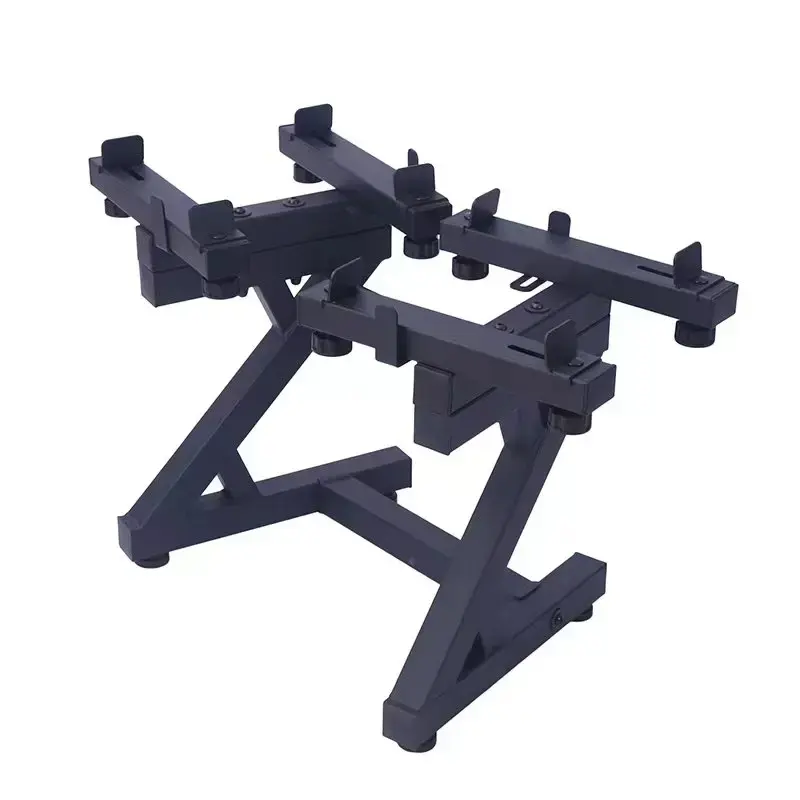
Beyond material selection, geometry determines load distribution efficiency. Triangular A-frame designs have become industry standard for mobile applications because they naturally distribute compressive forces through angled support members. However, the cross-mobile variant enhances this principle with horizontal cross-bracing that connects the A-frame apex to the caster base plate. This configuration creates a rigid box structure that resists twisting forces when navigating corners or floor irregularities.
Tier spacing follows ergonomic principles while accounting for material deflection. Engineers calculate optimal angles—typically 30-degree inclinations—to prevent dumbbell roll-off while minimizing wrist strain during retrieval. The staggering pattern between tiers must account for potential 0.5mm sag per level under maximum load, ensuring clearances remain adequate even at full capacity. High-strength steel's superior modulus of elasticity keeps this deflection minimal, maintaining consistent geometry throughout the loading range.
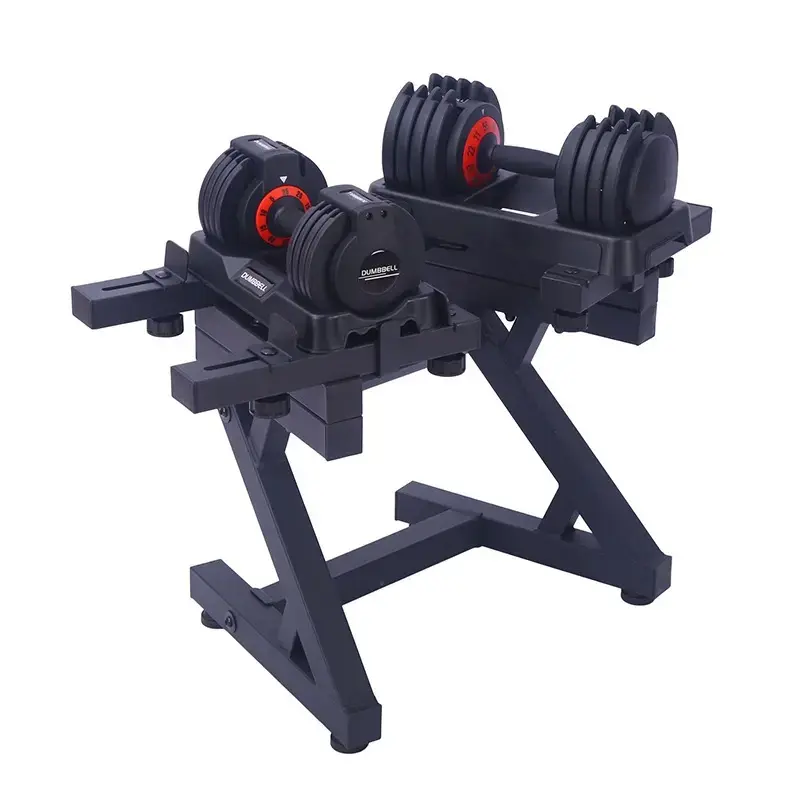
Mobility Systems: The Engineering Challenge
Integrating casters into a 200kg-capable frame introduces complex engineering constraints. Standard consumer-grade mobile racks often fail at the caster attachment points, where localized stresses concentrate. Commercial solutions employ reinforced base plates with through-bolted caster assemblies, distributing shear forces across multiple steel layers. The casters themselves deserve scrutiny—premium units feature polyurethane wheels rated for dynamic loads exceeding 300kg each, with sealed bearings that resist dust and moisture infiltration common in gym environments.
Locking mechanisms must engage positively without relying on friction alone. Cam-action locks that physically wedge against wheel rotation provide reliable stability during loading/unloading, preventing the micromovements that gradually loosen cheaper friction-based systems. The ability to securely immobilize the rack transforms it from mobile equipment to a fixed storage unit instantly, crucial for safety during peak usage periods.
Application Scenarios Driving Specifications
Commercial fitness centers operating 16-20 hours daily require storage that withstands continuous use. Morning group classes, afternoon personal training sessions, and evening open gym periods create diverse loading patterns—rapid weight changes, uneven tier distribution, and occasional impact loading when dumbbells return to the rack with momentum. A 200kg capacity rating ensures the system handles these real-world variables while maintaining structural precision.
Corporate wellness facilities and hotel gyms face different challenges: frequent reconfiguration for multi-purpose spaces and floor protection requirements. Mobile racks here must combine load capacity with non-marking casters and frame designs that distribute weight over larger surface areas, preventing concentrated pressure points that damage specialized flooring materials.
For strength training studios specializing in progressive overload programs, racks must accommodate incremental weight additions without requiring replacement. Starting with a 100kg dumbbell collection that grows to 200kg over two years demands a rack that performs identically at both ends of this spectrum—a scenario where high-strength steel's linear stress-strain relationship proves invaluable.
Quality Assurance Indicators
While manufacturers may vary, certain engineering details indicate true commercial-grade construction. Welding quality reveals manufacturing standards—continuous welds at all joints, not intermittent tack welds, indicate structural seriousness. Premium racks feature robotic welding for consistency, with post-weld heat treatment in critical areas to relieve residual stresses that could initiate cracks.
Surface protection extends beyond aesthetics. Powder coating systems with zinc-rich primers provide dual-layer corrosion protection, crucial for facilities in humid climates or those employing rigorous cleaning protocols. The coating thickness—typically 80-100 microns on commercial equipment—adds measurable impact resistance, preventing the chips and scratches that expose bare steel to oxidation.
Dimensional stability testing, though rarely advertised, separates professional equipment from consumer products. Reputable manufacturers subject prototypes to cyclic loading tests—10,000 load/unload cycles at 150% rated capacity—to verify structural permanence. This simulated decade of use reveals whether a rack maintains tier alignment or develops the subtle deformations that compromise safety.
Integration with Facility Management Systems
Cross-mobile functionality enables operational efficiencies beyond simple storage. Facility managers can implement zone-based training configurations, moving dumbbell collections to different floor areas based on class schedules. Cleaning protocols become streamlined—racks roll aside for floor maintenance, then return to exact positions using floor markings. Emergency egress paths remain flexible, with storage repositionable as occupancy patterns change.
Space utilization analytics benefit from mobile storage. Facilities can track which rack positions experience highest usage, informing future equipment purchases and floor plan optimizations. The ability to reconfigure without disassembly reduces labor costs and equipment downtime, directly impacting profitability in commercial operations.
Maintenance Protocols for Longevity
Even high-strength steel requires proper care to maintain its properties. Weekly inspections should focus on caster operation—checking for bearing smoothness and lock engagement integrity. Monthly assessments examine structural elements, looking for paint chips that expose bare metal or developing cracks at weld points. Quarterly procedures include bolt torque verification, ensuring caster attachment hardware maintains specified clamping forces.
Environmental controls significantly impact service life. While high-strength steel resists corrosion better than mild steel, prolonged exposure to cleaning chemical residue accelerates oxidation. Implementing a wipe-down protocol after each training day, using pH-neutral cleaners, extends coating life and prevents the crevice corrosion that develops where dumbbells contact rack surfaces.
Making Specification-Based Procurement Decisions
Evaluating cross-mobile dumbbell racks requires looking beyond marketing claims to engineering fundamentals. Request material certifications documenting steel grade and gauge thickness. Inquire about caster load ratings and bearing specifications. Ask for deflection test data showing tier sag under progressive loading. Legitimate commercial equipment manufacturers provide this technical documentation, understanding that facility managers must justify investments based on performance metrics, not promotional language.
The 200kg capacity threshold serves as a benchmark distinguishing equipment suitable for light commercial use from products engineered for high-frequency operation. Combined with high-strength steel construction and cross-mobile design, this specification indicates a product category designed for professionals who understand that storage infrastructure directly influences member satisfaction, safety incident rates, and long-term facility costs. When every component in a fitness facility must earn its floor space through reliable performance, these engineering details transform a simple rack into a strategic asset that supports operational excellence across the entire training environment.