

Adjustable dumbbell strength factory
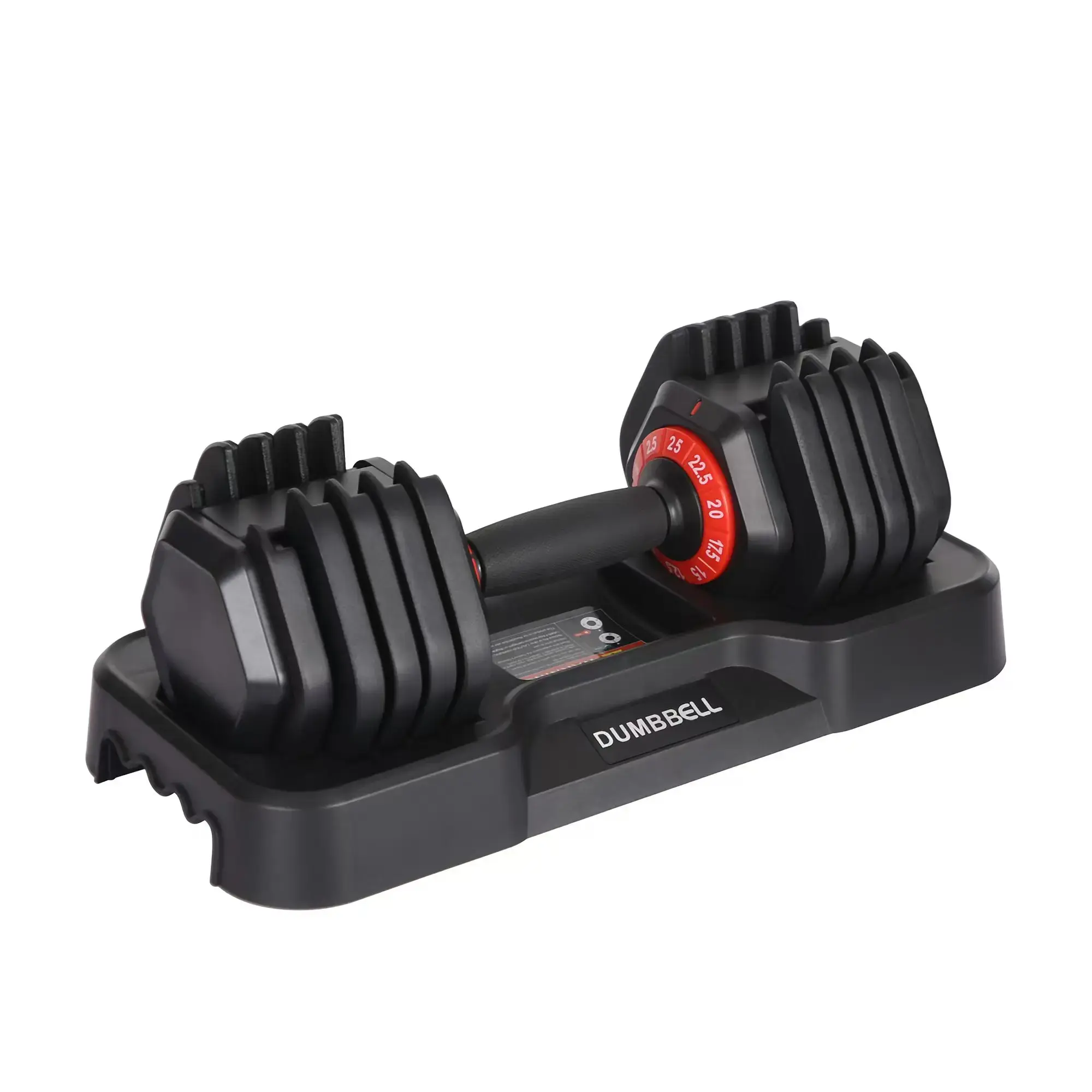

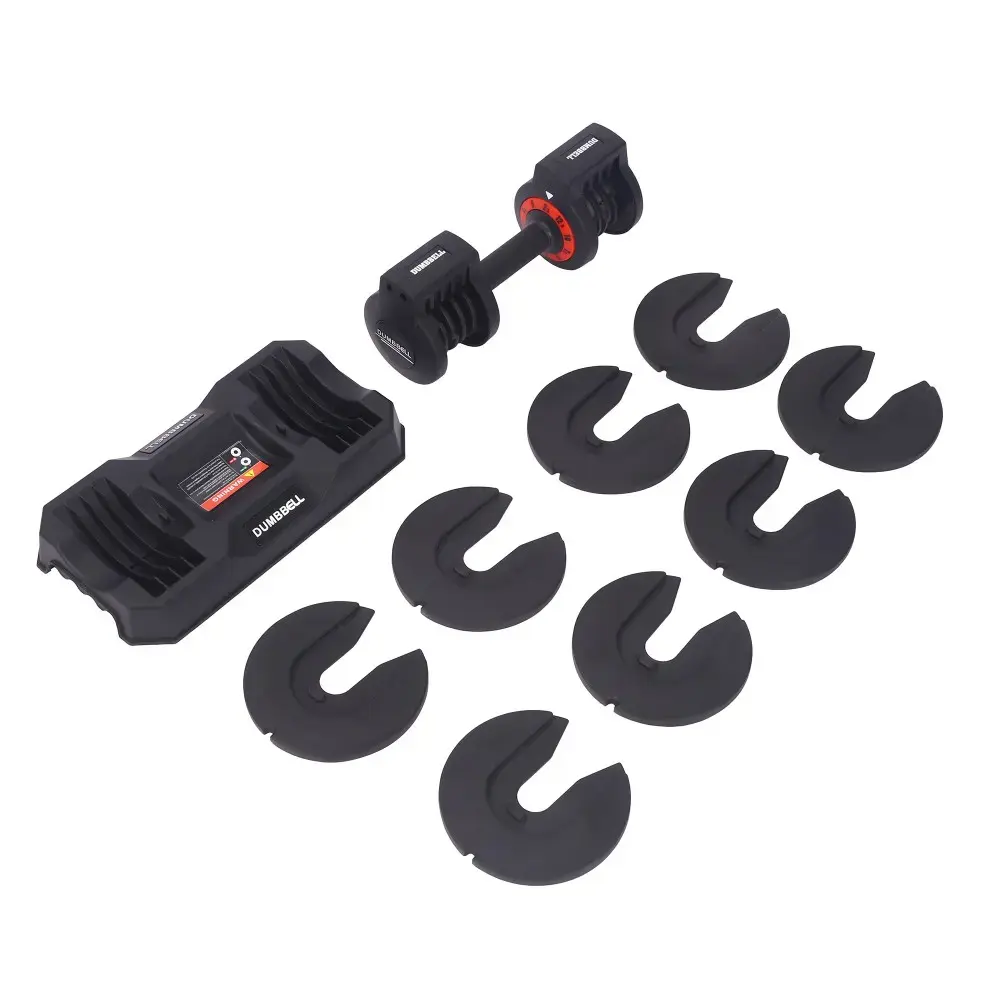
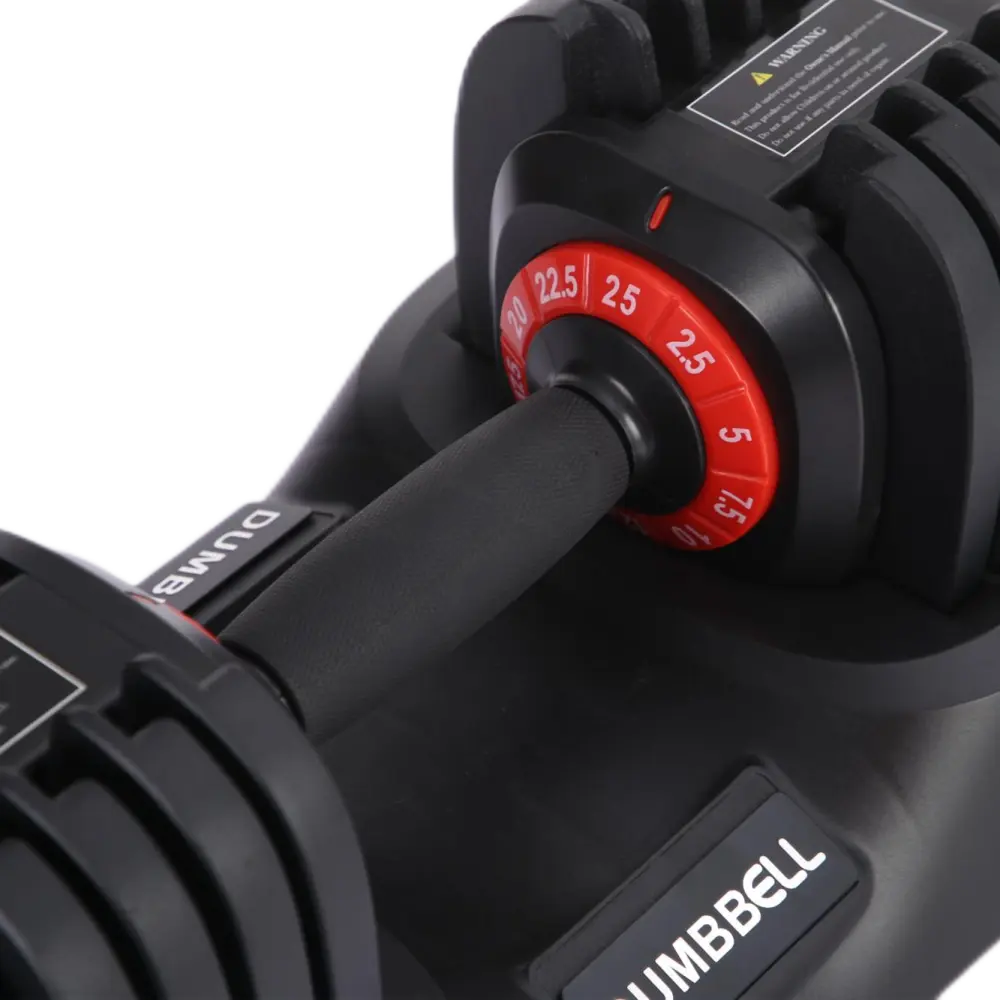
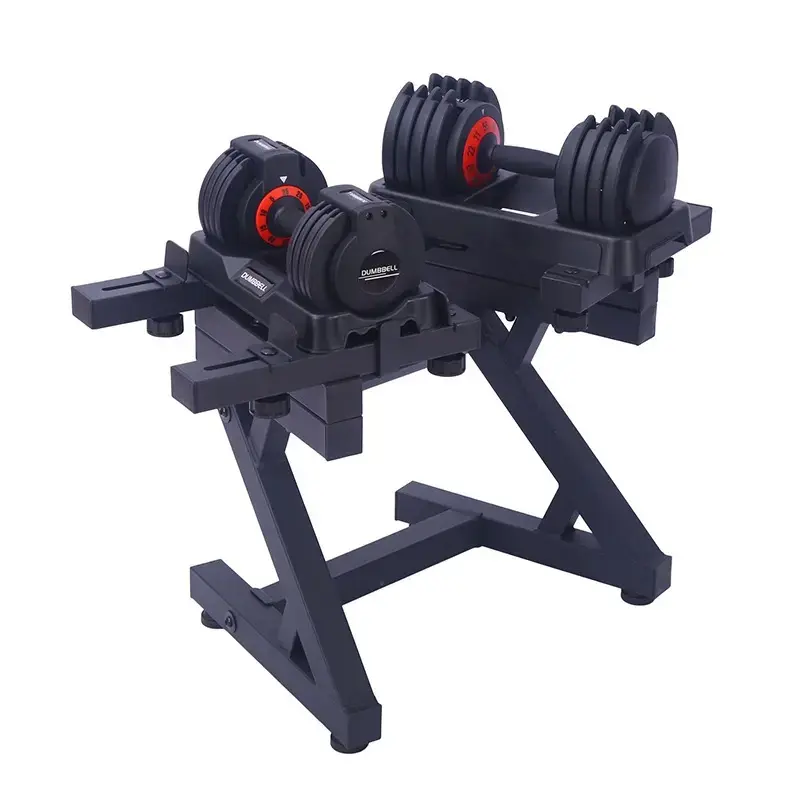
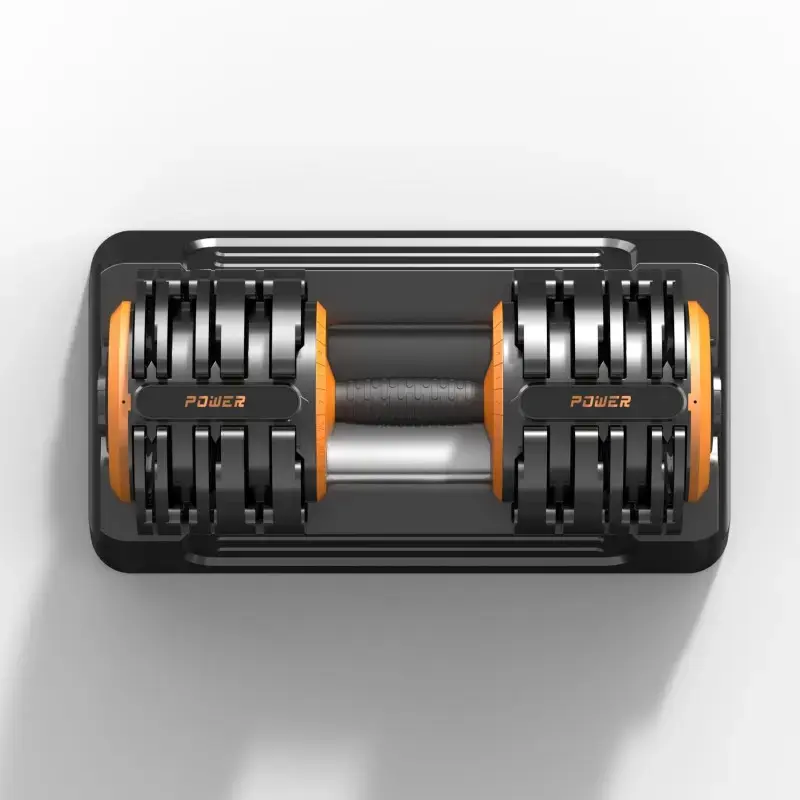
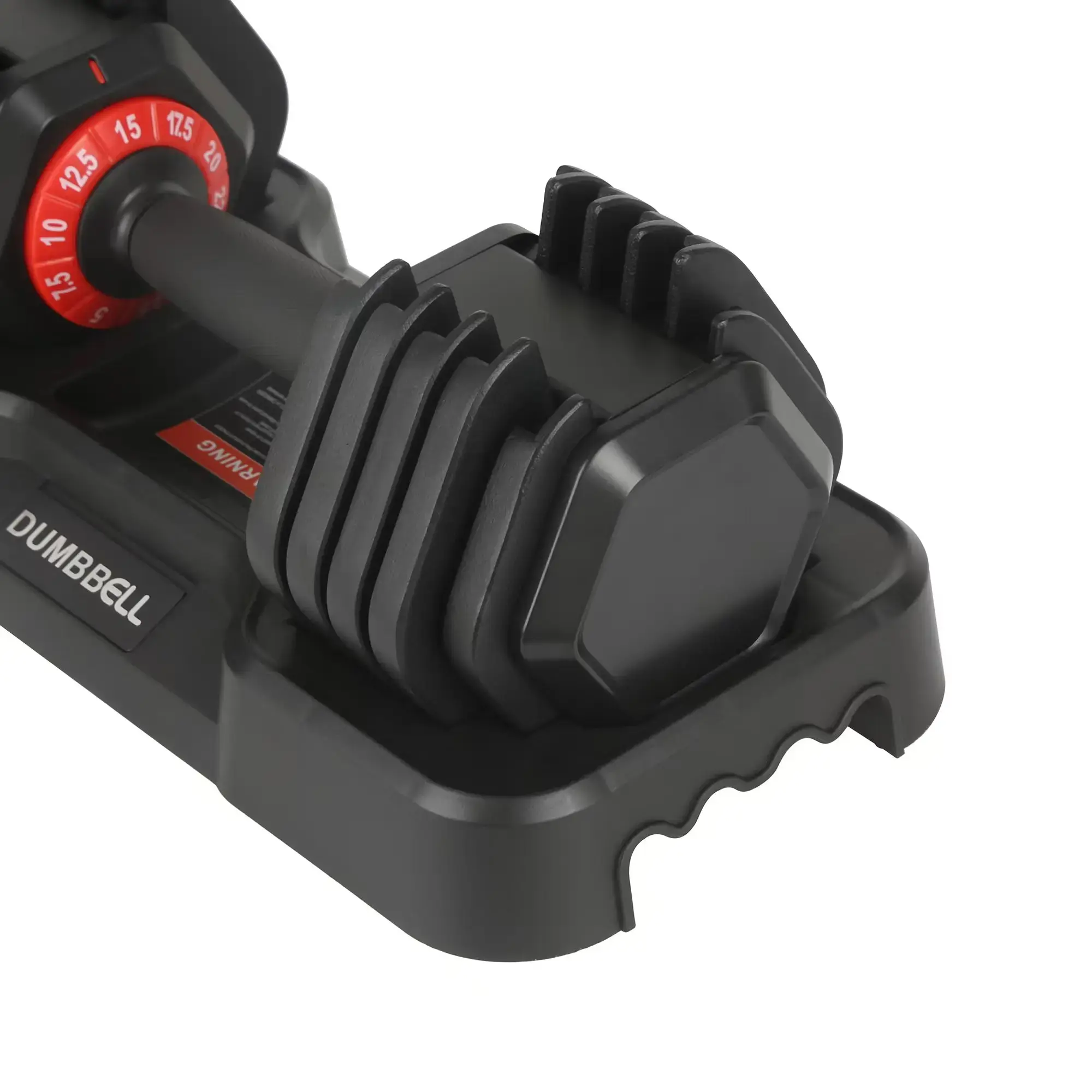
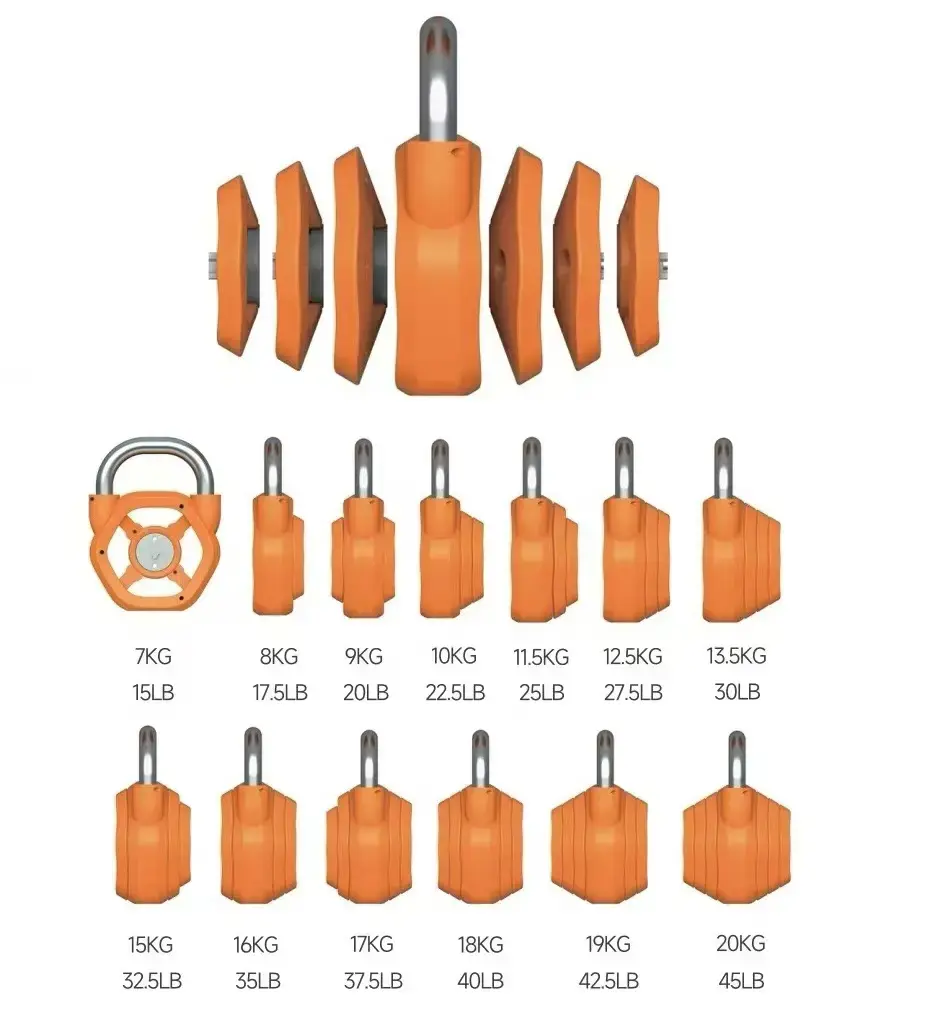
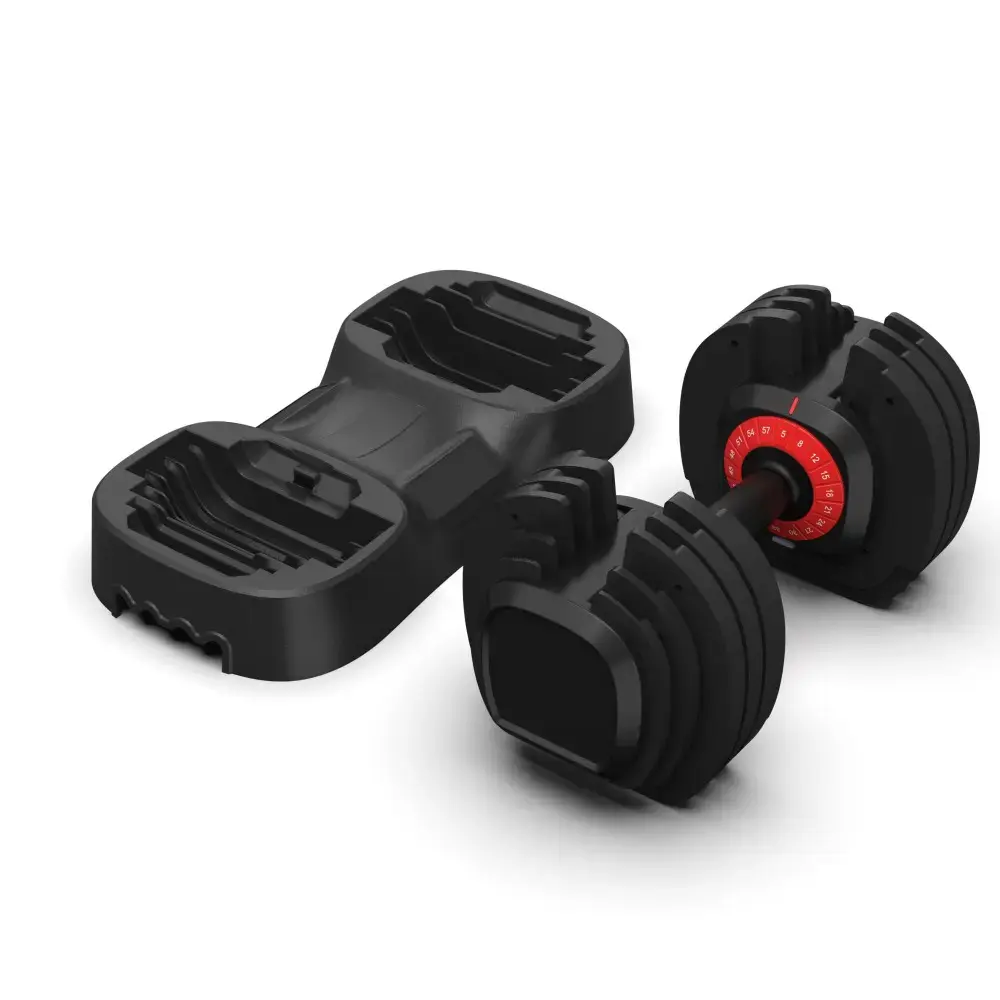
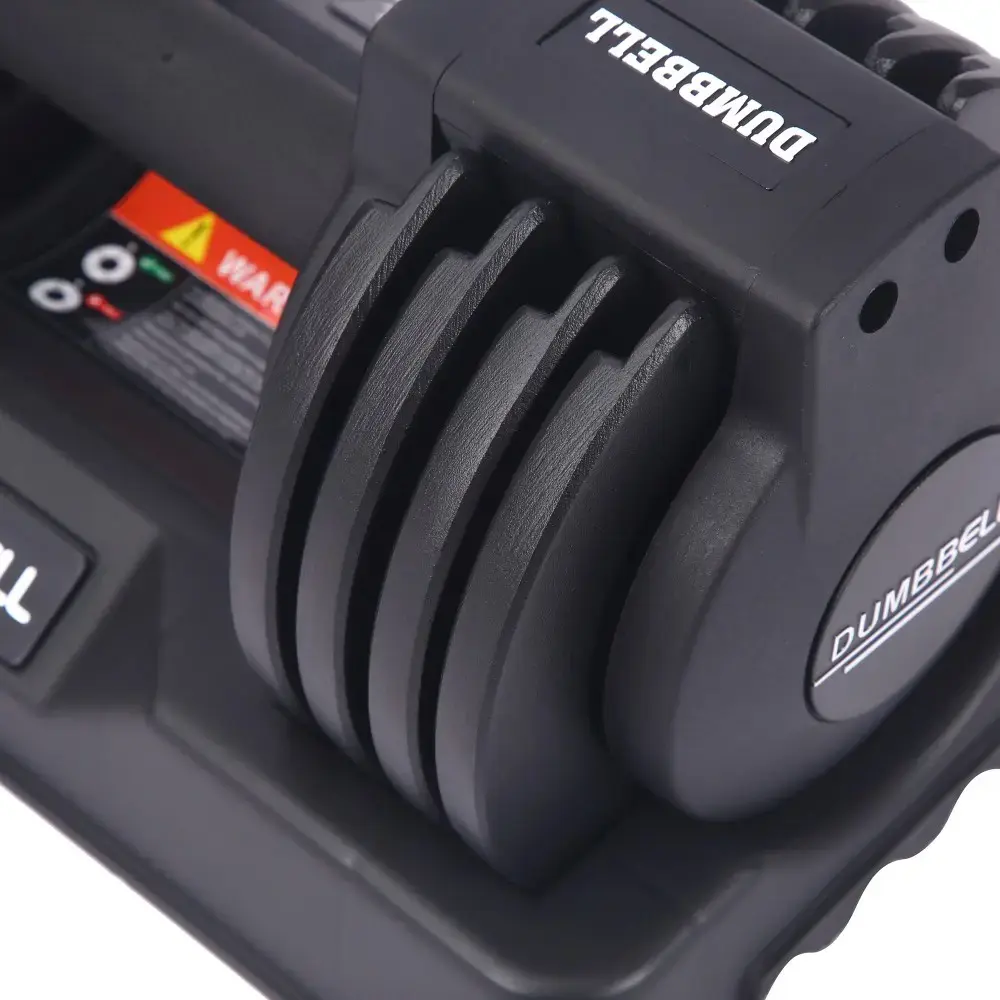
Transform Workouts: 25KG Adjustable Dumbbells Replace 10 Sets
In the modern fitness equipment market, space utilization has become a core consideration factor in product design. With the popularity of home gyms and small commercial fitness Spaces, the storage problem of traditional fixed-weight dumbbells has become increasingly prominent. The 25-kilogram adjustable dumbbell, as an innovative solution, has achieved the functional integration of replacing multiple traditional dumbbells with a single device through precise mechanical structure and humanized design. This article will delve deeply into its spatial optimization mechanism, engineering principles and market value, revealing how it redefines the design paradigm of dumbbell products.
First, engineering solutions to the space crisis
Traditional Dumbbell Sets require a huge amount of physical space. Taking a complete weight series covering 2.5 to 25 kilograms as an example, users usually need at least 10 pairs of fixed-weight dumbbells, which occupy about 1.5 square meters of storage area (calculated based on the standard dumbbell stand size). This poses a severe challenge to environments with limited space.
Adjustable Dumbbells solve this problem through a weight integration mechanism. Its core design concept lies in:
Volume replacement ratio optimization: A single adjustable dumbbell integrates the weight range equivalent to 10 pairs of traditional dumbbells into a single unit through an internal weight selection system, reducing space occupation by over 85%.
Three-dimensional space efficiency: By using vertical storage instead of horizontal arrangement, only 0.15 square meters of basic floor space is required, greatly optimizing the space utilization efficiency.
Modular storage system: Adjustable dumbbells used in pairs can be stored side by side without the multi-layer structure of traditional Dumbbell Racks, further reducing the storage footprint.
Second, technical analysis of mechanical structure and regulation mechanism
The spatial advantage of adjustable dumbbells stems from their precise engineering design, mainly reflected in the following technical approaches:
Dial selection system
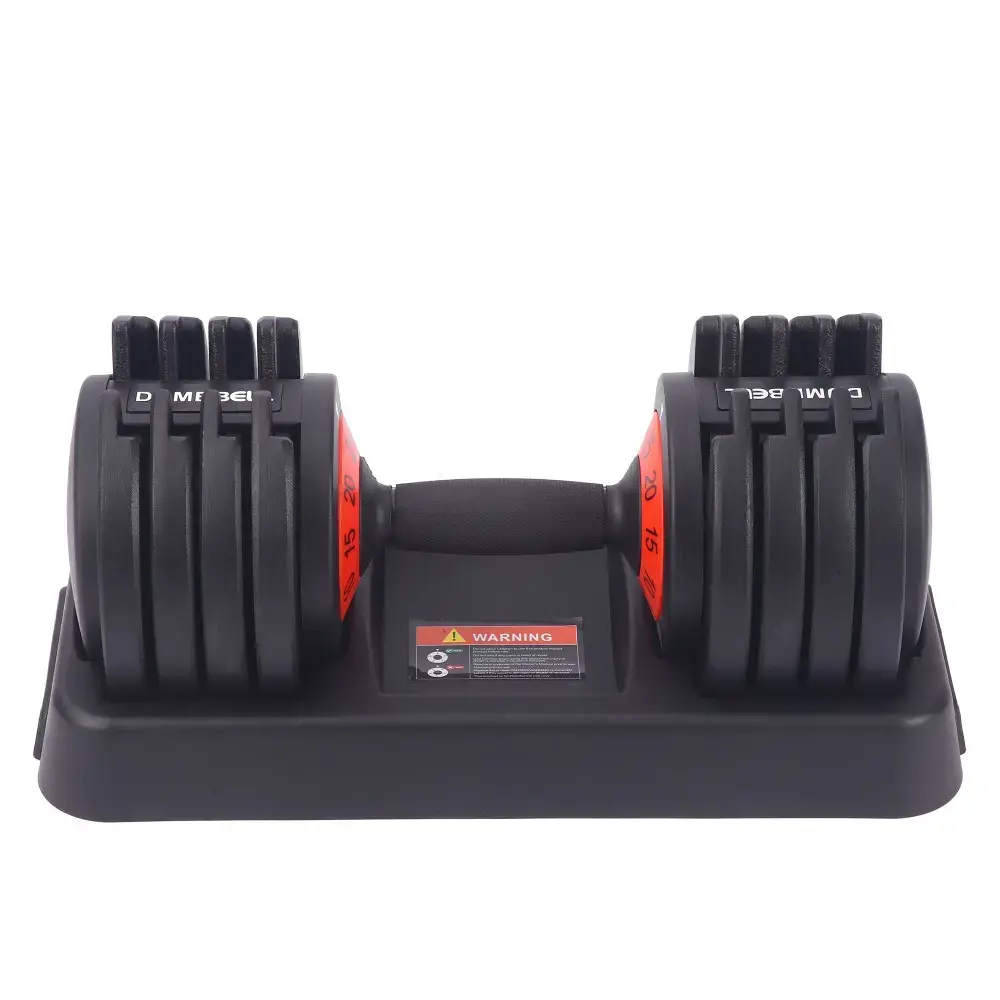
Ratchet locking mechanism: By rotating the dial to align the internal pins with the holes of the counterweight plate, rapid weight switching is achieved.
Error tolerance design: Precision components with tolerances controlled within ±0.1mm are adopted to ensure that the selector remains accurately aligned after thousands of operations.
Safety lock indication: Integrated visual/auditory feedback system, confirming that the weight module is fully locked to prevent accidental disengagement during training.
Slider counterweight technology
Magnetic positioning system: It uses permanent magnets to fix the position of the slider, preventing accidental displacement during transportation or storage.
Weight distribution optimization: Through central symmetry design, the stability of the center of mass under different configurations is maintained to ensure the mechanical consistency of weightlifting movements.
Quick adjustment interface: The ergonomically designed adjustment rod enables one-handed operation, with a switching time controlled within 10 seconds.
Third, the innovative application of materials science and structural mechanics
To achieve spatial compression while maintaining structural integrity, advanced materials and manufacturing processes are required
High-density composite material
Weight-to-volume ratio optimization: Alloy steel with a density of 7.8g/cm³ is used in combination with a polymer coating layer to achieve the maximum counterweight within the smallest volume.
Impact resistance: The surface treatment adopts electrostatic spraying process, with a coating thickness of 80-120μm, which can withstand collisions and scratches during daily use.
Environmental adaptability: The humidity resistance complies with the IP54 standard, ensuring the long-term reliability of the internal mechanism under various environmental conditions.
Structural reinforcement design
Finite element analysis optimization: Stress distribution simulation is carried out through computer-aided engineering (CAE), and reinforcing ribs are designed at key connection points.
Fatigue life test: After more than 100,000 weight switching cycles of testing, the wear rate of the mechanism is less than 0.01%.
Safety factor guarantee: The safety factor of all load-bearing components exceeds 5:1, far surpassing the ISO 20957-1 safety standard for fitness equipment.
Fourth, multi-dimensional improvements in user experience and training efficiency
In addition to spatial optimization, adjustable dumbbells also bring significant improvements in the training experience:
Optimization of training process
Inter-set rest efficiency: The weight switching time has been shortened from the traditional 60-90 seconds for dumbbells to within 15 seconds, maintaining the training intensity and heart rate range.
Training capacity improvement: Research shows that reducing device conversion latency can increase the efficiency of a single training session by 23% (based on ACSM training efficiency research data).
Progress in ergonomics
Grip space consistency: Regardless of the weight configuration, the handle diameter remains constant (typically 30-35mm), in line with ergonomic best practices.
Balance point stability: Through the counterweight distribution algorithm, the consistency of rotational inertia under different weight Settings is ensured, improving the accuracy of motion control.
Fifth, analysis of commercial value and market positioning
From a procurement perspective, adjustable dumbbells offer multiple business advantages:
Optimization of inventory management
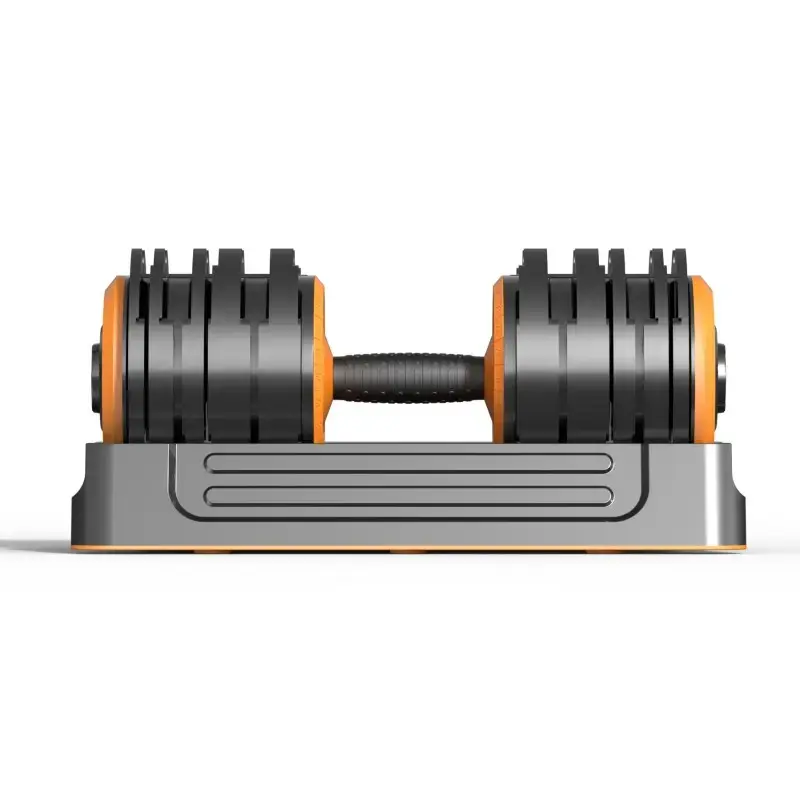
SKU simplification: A single product code replaces dozens of traditional dumbbell SKUs, significantly simplifying procurement, warehousing and logistics management.
Display efficiency improvement: The demand for retail display space has decreased by 70%, and the floor efficiency (sales per square meter) has increased by more than three times.
Target market adaptation
Home fitness scenarios: Perfectly match the demand characteristics of the average fitness space in urban residences (usually less than 5 square meters).
Commercial facility supplement: As an auxiliary training area device for a large fitness center, it effectively expands the customer capacity per unit area.
Professional institution application: It meets the needs of space-sensitive but diverse professional scenarios such as physical therapy centers and sports team training rooms.
Sixth, Technological development Trends and Future Prospects
Adjustable dumbbell technology is still evolving. Future development directions include:
Intelligent integration: Embedded sensors monitor training data and transmit it to mobile applications via Bluetooth.
Adaptive resistance: Research on stepless regulation technology based on magnetorheological fluid or centrifugal mechanism.
Material innovation: Explore the application of higher-density materials such as tungsten composites to further reduce product volume.
The 25-kilogram adjustable dumbbell represents a fundamental shift in the design thinking of fitness equipment - an evolution from single-function devices to integrated, space-adaptive solutions. Its value proposition has transcended mere space savings and extended to multi-dimensional advantages such as enhanced training efficiency, optimized user experience, and commercial value creation. For forward-looking purchasing decision-makers, understanding the engineering principles and market potential behind this product category will provide an important technical assessment basis for product portfolio strategies. With the continuous changes in global fitness space conditions, this highly integrated design concept is bound to become the mainstream direction of industry development, providing unprecedented space solutions and value optimization opportunities for various fitness venues.